Meniscus Injuries: Causes, Symptoms & Treatment
A twist on the pitch, a deep squat in the gym, or even kneeling down to weed the garden — and suddenly your knee is swollen, sore and not quite trusting you when you walk. Meniscus tears are among the most common knee injuries we see at our Tullamore clinic, affecting everyone from GAA and rugby players to weekend gardeners and desk workers who run at the weekends.
The good news? Many meniscus injuries respond very well to physiotherapy, and surgery is far from inevitable for most people. In this guide, we'll explain what the meniscus actually does, how tears happen, the symptoms to watch for, and how a structured rehab programme gets you back to full confidence in your knee.
What Is the Meniscus?
Each of your knees contains two C-shaped wedges of tough, rubbery cartilage called the medial meniscus (inner side) and the lateral meniscus (outer side). They sit between your thigh bone (femur) and shin bone (tibia), acting as shock absorbers and stabilisers for the joint.
Their jobs include:
- Load distribution — spreading the forces of walking, running and jumping across the knee joint
- Shock absorption — cushioning impact during activity
- Joint stability — helping the rounded femur sit securely on the flat tibia, especially during twisting movements
- Lubrication and nutrition — helping spread synovial fluid to nourish the joint cartilage
Because the meniscus has a limited blood supply — particularly to its inner two-thirds — healing capacity varies depending on where the tear is, not just how big it is.
How Do Meniscus Injuries Happen?
Traumatic Tears
Most tears in younger, active people happen with a sudden twisting or pivoting movement while the knee is bent and bearing weight — a classic mechanism in football, GAA, rugby and basketball. Tears often occur alongside other ligament injuries, particularly ACL ruptures, so a proper assessment matters if the knee feels unstable after an injury.
Degenerative Tears
From around age 40 onwards, the meniscus gradually weakens and loses some of its elasticity. Tears can then happen with surprisingly minor events — standing up awkwardly, stepping off a kerb, or a deep squat. Degenerative tears are very common and, importantly, are often present on MRI scans of people with no knee pain at all. This is a key reason imaging alone rarely tells the full story, and why a thorough clinical assessment comes first.
Symptoms of a Meniscus Tear
Typical signs include:
- Localised pain along the inner or outer joint line of the knee, often worse with deep bending, twisting, squatting or stairs
- Swelling — often developing over 24 hours after injury (a slower, puffier swelling than the rapid "ballooning" seen with ligament ruptures and bleeding in the joint)
- Catching or locking — a sensation of the knee momentarily jamming, usually when straightening it
- Giving way — the knee feeling unstable or unreliable during turning movements
- Reduced range of motion — difficulty fully bending or straightening the knee
- Clicking in the knee, particularly painful clicking
If you've locked your knee completely, or the swelling is severe and rapid, we'd advise getting assessed promptly — either with us or via your GP.
How We Assess a Suspected Meniscus Injury
At your first appointment, your physiotherapist will take a detailed history of the injury and examine the knee: checking joint line tenderness, testing the knee's range of motion and strength, and performing specific meniscus provocation tests such as McMurray's and Thessaly tests.
Where the diagnosis is unclear, or we suspect a significant tear or associated ligament damage, we may recommend imaging. An MRI gives the clearest picture of the meniscus, though as mentioned above, we always interpret scan findings alongside your symptoms — many age-related changes on MRI never cause problems.
Treatment: Do You Need Surgery?
For the majority of meniscus tears — particularly degenerative and small traumatic tears — high-quality evidence supports physiotherapy-led management as the first-line treatment, with outcomes comparable to surgery for many tear types. Surgery is generally considered when:
- The knee locks repeatedly (a displaced "bucket handle" tear)
- There's a repairable tear in the outer, well-supplied zone of the meniscus in a younger patient
- Symptoms persist and significantly limit activity despite a genuine, well-run rehab programme over 3–6 months
What Physiotherapy Involves
Rehab typically moves through phases:
- Phase 1 — Settle the pain and swelling: load management, activity modification, ice, manual therapy and gentle range-of-motion exercises
- Phase 2 — Rebuild strength and control: progressive quadriceps, hamstring, glute and calf strengthening, plus balance and proprioception work
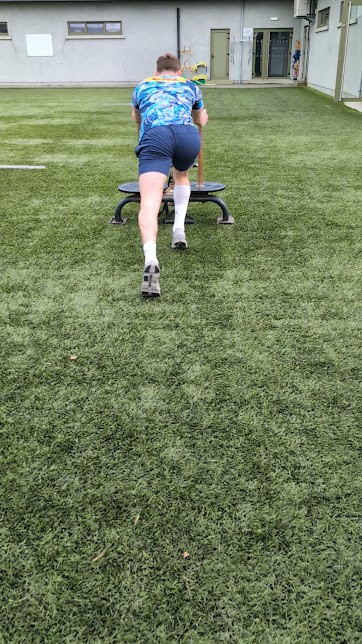
- Phase 3 — Return to activity: sport-specific drills, running progression, cutting and landing mechanics, and a graded return to your sport or workload
Where a limp or altered walking pattern has persisted, a gait analysis can help us understand how your movement has adapted and address it within your rehab. For stubborn, persistent joint pain alongside your rehab, some patients also benefit from radial shockwave therapy.
Recovery: What to Expect
Most people with a degenerative or small traumatic tear make good progress within 6–12 weeks of consistent rehab. Larger traumatic tears or post-surgical repairs take longer — commonly 3–6 months — but return to sport rates are generally strong when rehab is followed properly. The single biggest predictor of a good outcome is not the size of the tear on the scan, but how well the surrounding muscles are reconditioned.
When to Seek Help
Book an assessment if your knee is:
- Swollen, painful or clicking more than a few days after an injury
- Catching or locking when you move it
- Giving way during everyday activities or sport
- Stopping you from squatting, running, or working comfortably
Early, accurate assessment prevents months of compensatory problems — and often shortens your overall recovery.
Concerned about your knee? Book an appointment with our team in Tullamore, or call us on 09064 92100 to discuss whether physiotherapy is right for you.