
Extracorporeal Shockwave Therapy (ESWT)
Shockwave Therapy Tullamore
Shockwave Therapy for Persistent Tendon and Heel Pain in Tullamore, Co. Offaly
Book a Shockwave Therapy Assessment in TullamoreShockwave Therapy for Persistent Tendon and Heel Pain in Tullamore, Co. Offaly
Book a Shockwave Therapy Assessment in TullamoreAt Physio Tullamore, we provide Shockwave Therapy in Tullamore, Co. Offaly as part of the treatment and rehabilitation of selected persistent musculoskeletal conditions. Shockwave Therapy, also known as Extracorporeal Shockwave Therapy (ESWT), is a non-invasive treatment that delivers controlled mechanical pressure waves into targeted tissues.
It is most commonly considered for persistent tendon and heel pain that has not responded fully to appropriate rehabilitation, activity
modification or other conservative treatment. Our physiotherapists do not use shockwave therapy as a stand-alone treatment. Where
appropriate, it is combined with a structured rehabilitation programme designed to address strength, tendon capacity, movement and the
factors contributing to your symptoms.
No needles, no surgery — controlled mechanical pressure waves delivered through the skin to targeted tissue.
We combine shockwave with a structured rehabilitation programme addressing strength, tendon capacity and movement.
Shockwave is only used where your clinical assessment suggests it may add value to an appropriate plan.
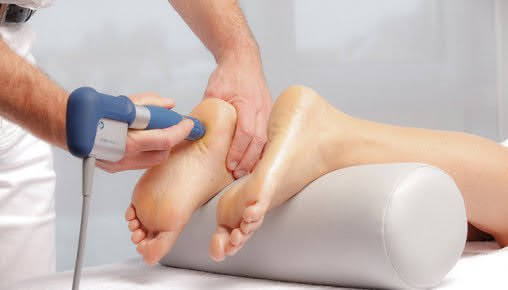
Persistent pain underneath the heel is one of the most common reasons patients attend for shockwave therapy. Shockwave therapy may be considered when plantar heel pain has remained persistent despite appropriate management. Treatment is normally combined with advice regarding activity, footwear, calf and foot strength and progressive loading.
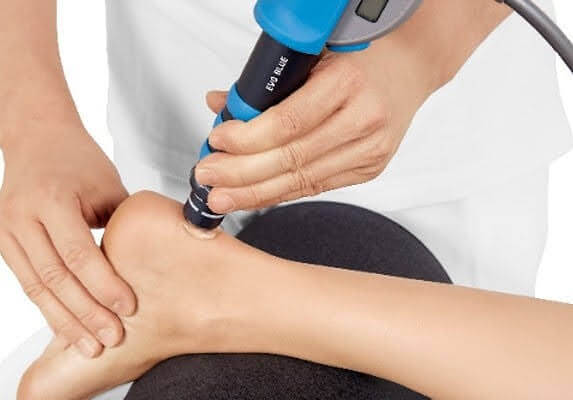
Achilles tendinopathy can cause pain and stiffness around the Achilles tendon, particularly during running, walking or sporting activity. Shockwave therapy may be considered in selected patients alongside an individualised Achilles tendinopathy rehabilitation and progressive tendon-loading programme.
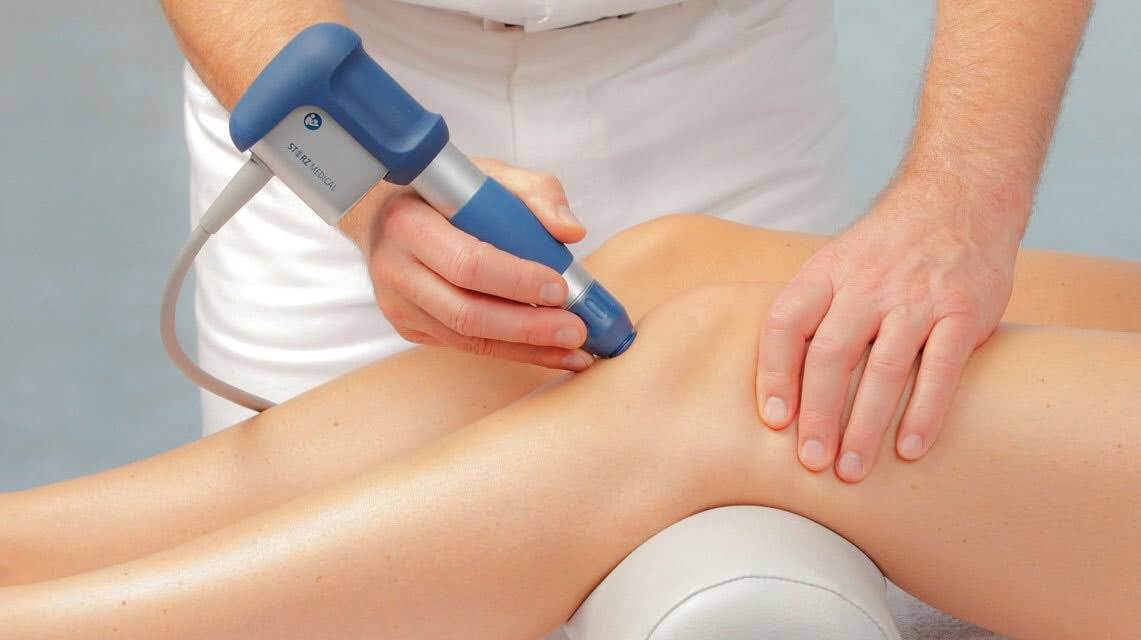
Patellar tendinopathy — sometimes referred to as jumper's knee — commonly affects athletes involved in jumping, running and change-of-direction sports. Shockwave therapy may sometimes form part of a wider rehabilitation programme alongside progressive quadriceps and tendon loading, including work on patellar tendinopathy.
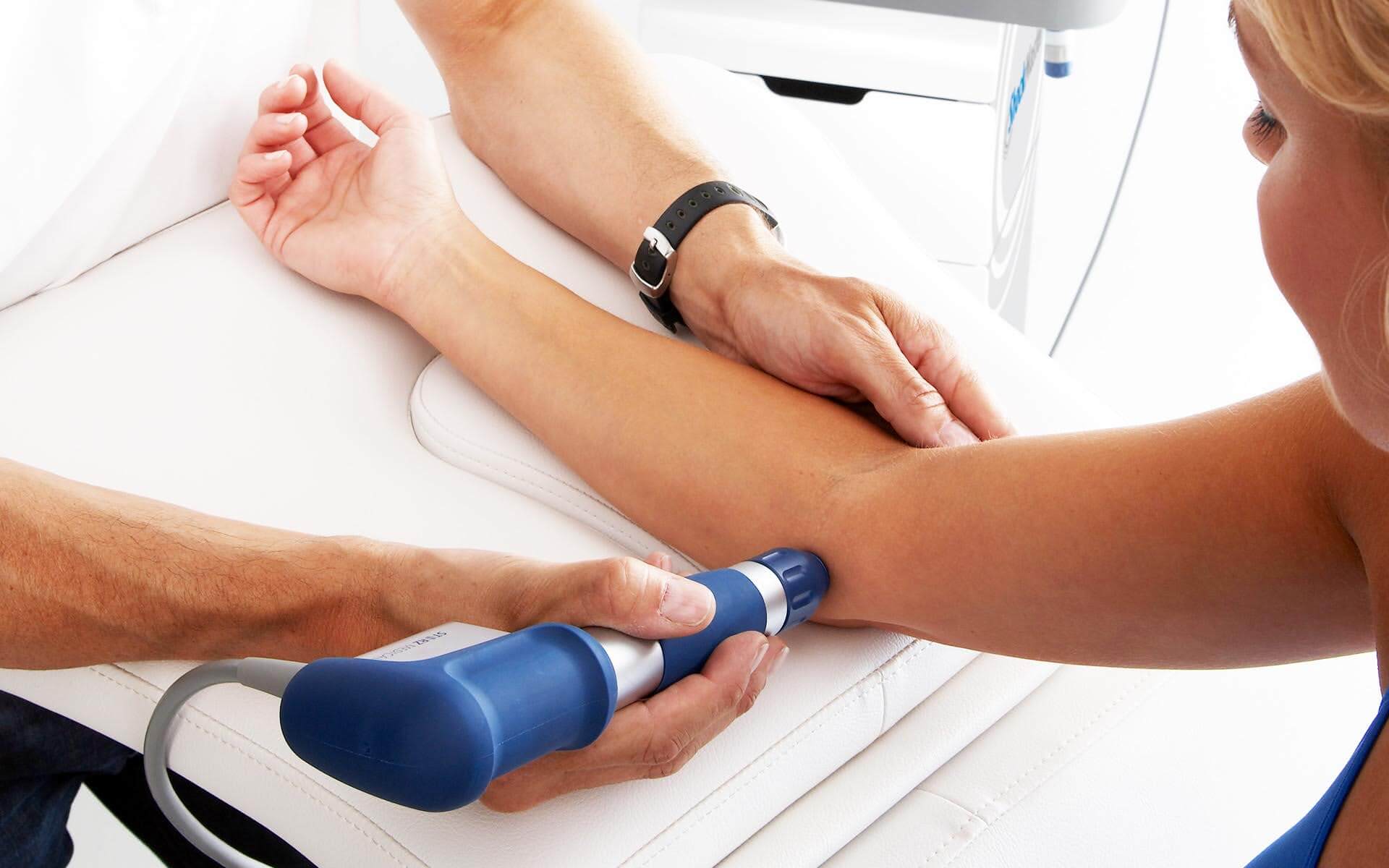
Elbow tendinopathy can cause persistent pain around the outside of the elbow during gripping, lifting and upper-limb activities. Where symptoms have persisted, shockwave therapy may be considered alongside progressive strengthening and load management.
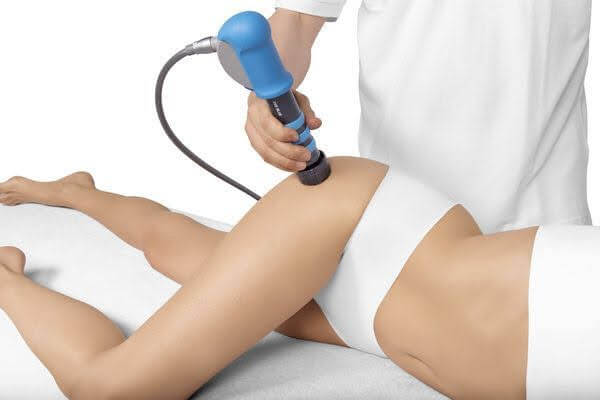
Pain around the outside of the hip is often referred to as greater trochanteric pain syndrome rather than simply "hip bursitis". Management normally involves identifying aggravating loads and progressively improving hip and lower-limb capacity. Shockwave therapy may be considered in selected persistent cases.
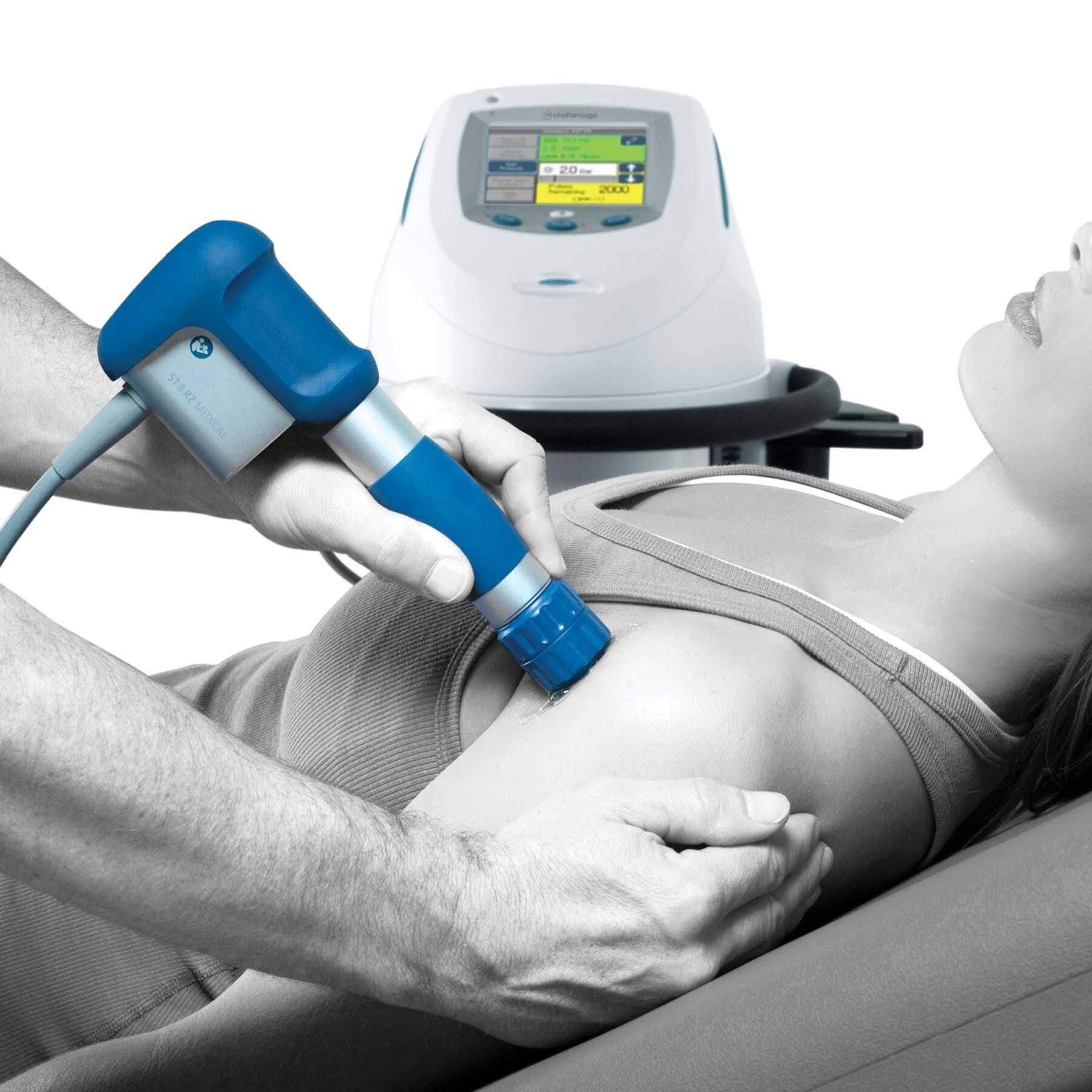
Shockwave therapy may sometimes be considered for selected shoulder tendon disorders. Because different shoulder conditions require different management, we recommend a physiotherapy assessment before deciding whether shockwave therapy is appropriate.
Extracorporeal Shockwave Therapy uses a handheld device to transmit controlled mechanical pressure waves through the skin into a targeted area. Despite the name, shockwave therapy does not involve an electrical shock. The mechanical stimulus produced by treatment is thought to influence pain processing and biological responses within the treated tissue. Shockwave therapy is therefore usually considered as one component of rehabilitation rather than a replacement for exercise and progressive loading.
The effectiveness of shockwave therapy varies depending on the condition being treated, the individual patient and the rehabilitation programme used alongside it. Research supports its use most strongly for certain persistent tendon and heel pain presentations, although results vary between conditions. For example, research into plantar heel pain / plantar fasciitis has shown improvements in pain and function in some patients, particularly over the medium term. Evidence for other conditions such as Achilles, patellar and shoulder tendinopathy is more mixed, which is why we assess each patient individually rather than recommending shockwave therapy for everybody.
There is no treatment that can guarantee a successful outcome. At Physio Tullamore, shockwave therapy is used when your clinical assessment suggests it may add value to an appropriate rehabilitation programme.
Before beginning treatment, your physiotherapist will assess the painful area and determine whether shockwave therapy is appropriate. The intensity of treatment can be adjusted according to the condition being treated and your tolerance, and your overall physiotherapy appointment may also include assessment, rehabilitation and exercise progression.
Your physiotherapist assesses the painful area and confirms shockwave therapy is appropriate.
A treatment gel is applied to the skin and the applicator is positioned over the target area.
Mechanical pressure waves are delivered through the applicator — typically 5–10 minutes of treatment.
Intensity is adjusted throughout the session according to the condition and your tolerance.
The number of sessions required varies between patients and conditions. A typical course may involve approximately 3–6 treatment sessions, often spaced around one week apart. Your physiotherapist will advise you on the appropriate treatment frequency following assessment. It is important to remember that shockwave therapy is usually only one component of treatment.
Shockwave therapy can sometimes be uncomfortable during treatment, particularly when treating a sensitive area. Treatment intensity can be adjusted throughout the session according to your tolerance. Some patients may experience temporary:
These symptoms are generally temporary. Your physiotherapist will explain what to expect before treatment.
Your physiotherapist will provide individual advice based on the condition being treated. In many cases you can continue normal day-to-day activity following treatment. Your rehabilitation programme and exercise loading will be adjusted according to your symptoms and stage of recovery.
We generally want patients to remain appropriately active rather than relying solely on passive treatment.
Full physiotherapy assessment of the painful area and contributing factors.
Diagnosis, goal setting and an individualised rehabilitation plan.
3–6 sessions, typically spaced around a week apart, where clinically appropriate.
Progressive strength, tendon loading and movement work alongside treatment.
Regain the capacity required for work, running, training or sport.
One of the most important principles at Physio Tullamore is that shockwave therapy should not simply be applied repeatedly without addressing why the problem has persisted. Persistent tendon pain can be influenced by factors such as:
For this reason, your physiotherapist may combine shockwave therapy with a structured rehabilitation plan. Our aim is not simply to reduce symptoms — it is to help you regain the capacity required for work, running, training or sport.
Physio Tullamore provides physiotherapy, sports rehabilitation and performance services from our clinic in Tullamore, County Offaly. Our approach combines clinical assessment with progressive rehabilitation and, where appropriate, objective strength and performance testing.
Assessment by an experienced clinician and individualised treatment planning.
Shockwave therapy where clinically appropriate — never as a stand-alone.
Progressive rehabilitation, strengthening and return-to-sport planning.
Access to advanced strength and performance testing where required, with clear advice on activity and training load.
Rather than simply treating the painful area, we aim to identify the factors contributing to your problem and develop a plan to help you return to the activities that matter to you.
If you have been experiencing persistent tendon, heel, elbow, hip or sporting pain and previous treatment has not completely resolved your symptoms, we can assess whether shockwave therapy may be appropriate for you. Our clinic is based in Tullamore, Co. Offaly, providing physiotherapy and sports rehabilitation to patients and athletes from Tullamore, Offaly and across the Midlands.
Book an Appointment OnlineNot ready to book? Ask a question instead →