
ACL Management
Structured ACL rehabilitation and return to sport at Physio Tullamore — using objective force and movement profiling to guide every stage of your recovery.
Book an ACL Consultation in TullamoreStructured ACL rehabilitation and return to sport at Physio Tullamore — using objective force and movement profiling to guide every stage of your recovery.
Book an ACL Consultation in Tullamore
At Physio Tullamore, we have structured protocols and management systems for returning players safely back
to sport following ACL injury or reconstruction. Our approach is comprehensive — addressing every physical and psychological factor that
contributes to a successful return, from the early stages of rehabilitation through to high-velocity sport-specific tasks.
ACL injury is often a movement dysfunction — the result of one or more of the following:
The first three factors are modifiable — they can be addressed through structured rehabilitation. The fourth, uncontrollables, covers anatomical and structural factors (such as ACL notch width and ligament make-up) that cannot be changed. While these cannot be trained away, understanding them helps contextualise an athlete's risk. Together, these factors combine to create the conditions for injury, and addressing each modifiable factor is central to the rehabilitation and return to sport process.
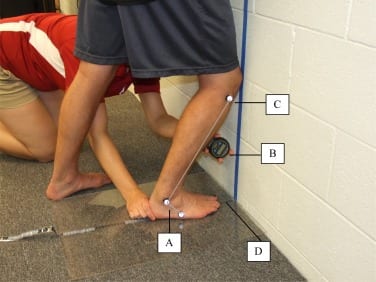
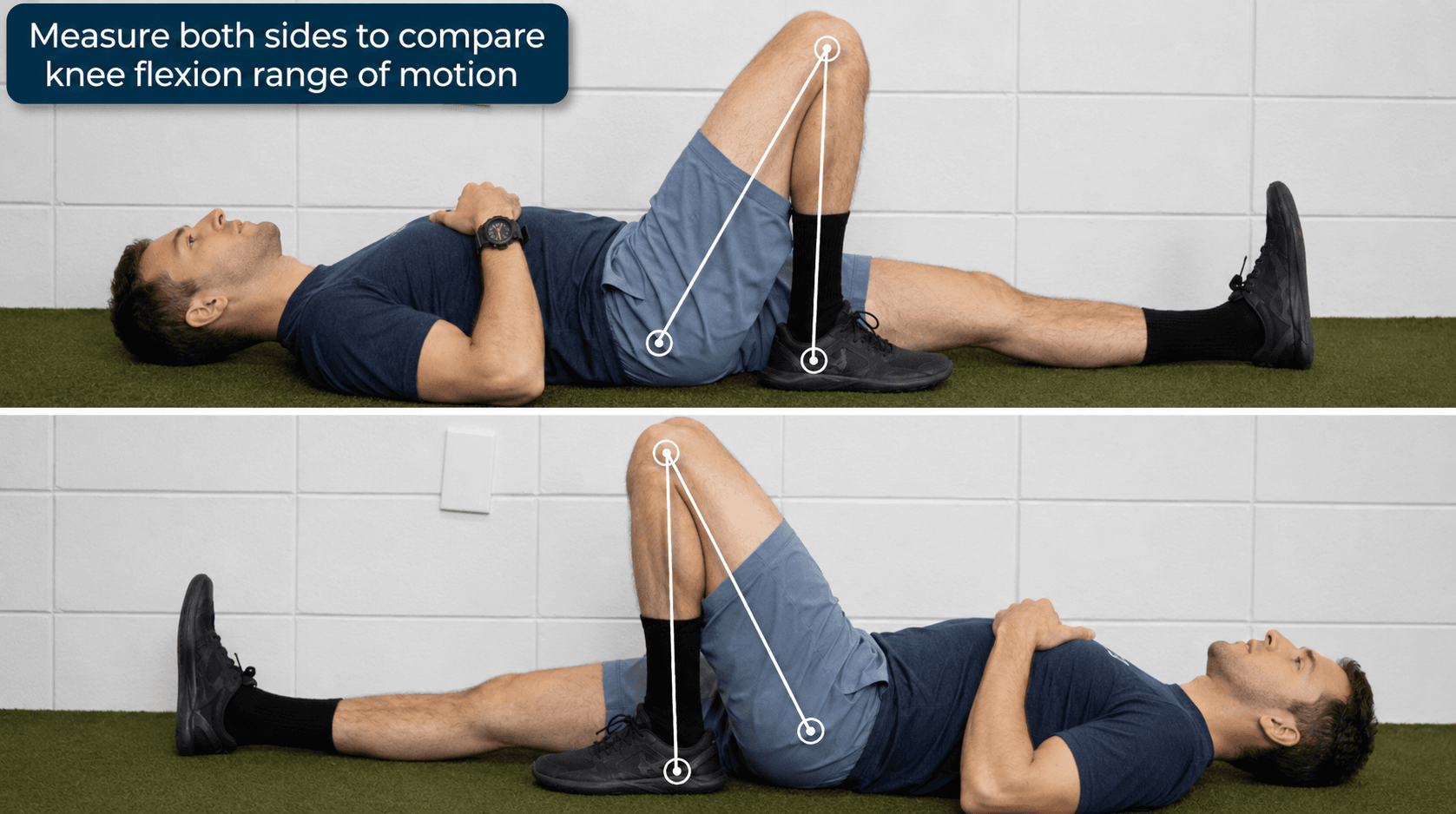
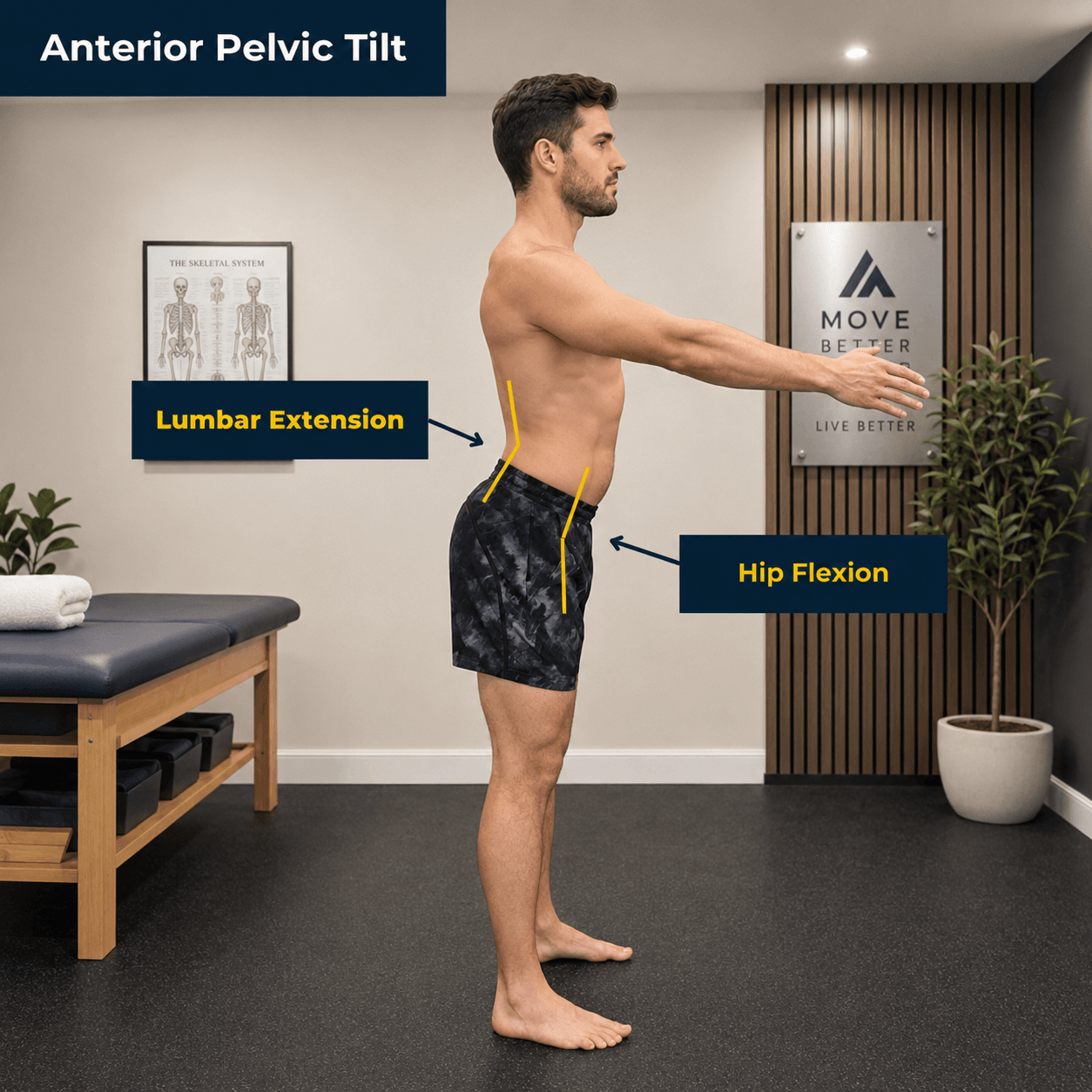
Range of movement of both peripheral joints (the knee itself) and global joints (hip, ankle, thoracic spine) affects the whole system.
The knee does not work in isolation — restricted ankle dorsiflexion, hip mobility, or thoracic rotation can all contribute to
compensatory movement patterns at the knee.
The clinic uses clinical treatments including joint mobilisations to restore range of movement, ensuring the full kinetic chain has the mobility it needs for optimal movement. Where thoracic or cervical contributions are identified, spinal rehabilitation is integrated into the programme to address the underlying restrictions.
The clinic screens static postures and fundamental movement patterns to identify the underlying movement quality that an athlete brings to every task. Key movement patterns screened include:
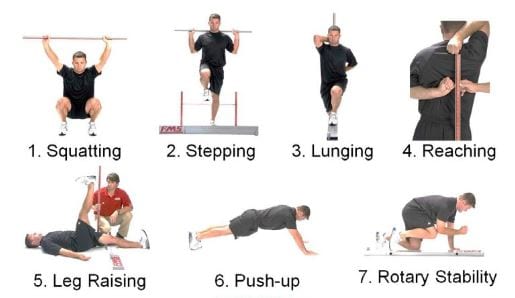
These underlying fundamental movement patterns can potentially translate into movement errors during dynamic, high-velocity movements such as:
If an athlete demonstrates poor movement quality in a simple bodyweight squat or lunge, these same errors will be magnified at speed during sport. We utilise advanced screening anc coaching which is used to develop motor control and postural awareness, building the foundation for safe, high-quality movement under load and at speed.
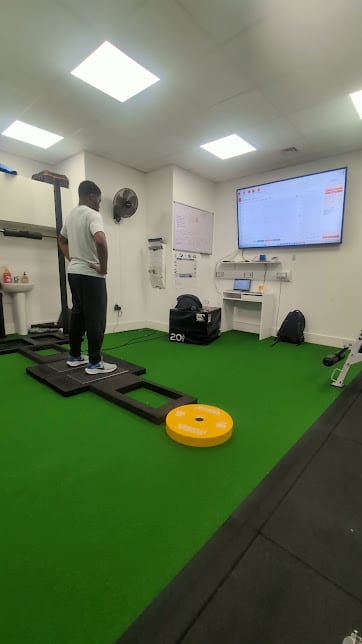
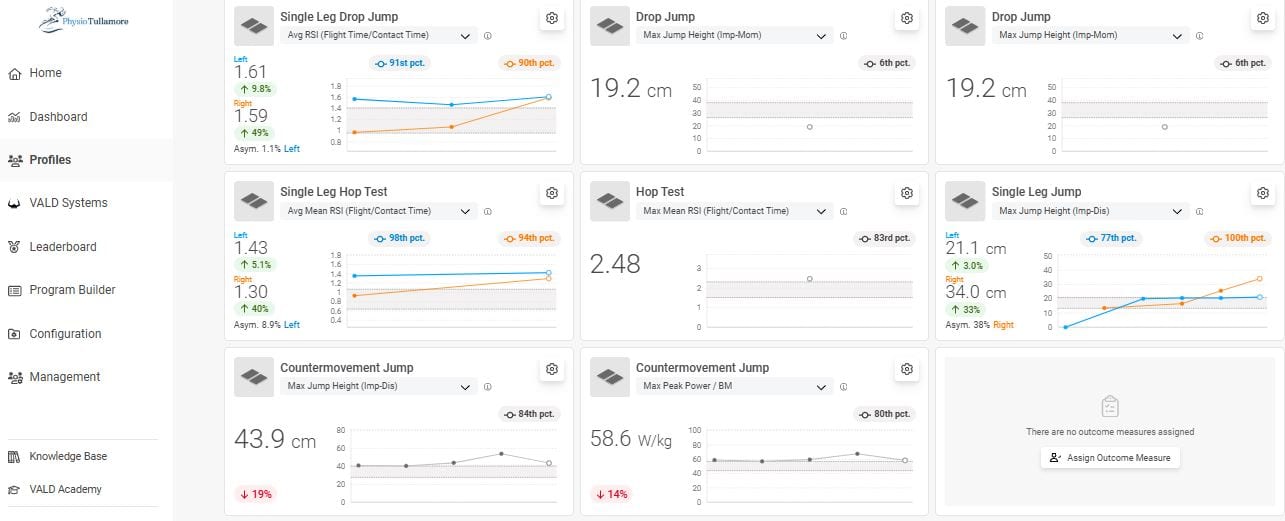
The clinic profiles athletes, creating a rounded examination of how the athlete expresses force. This profiling draws on a range of objective measures:
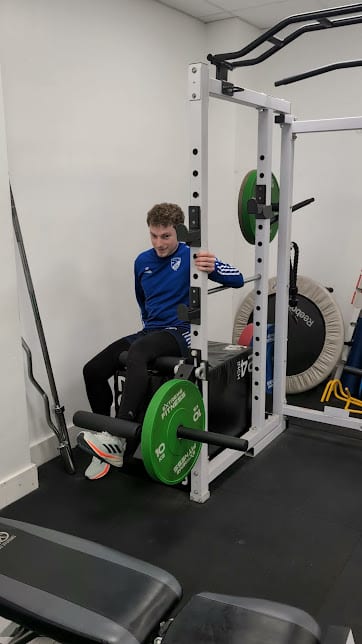
Structured, periodised gym programming built around your rehab milestones — and progressed as you hit them.
Training load is tracked session by session, keeping you progressing without under- or over-loading the healing knee.
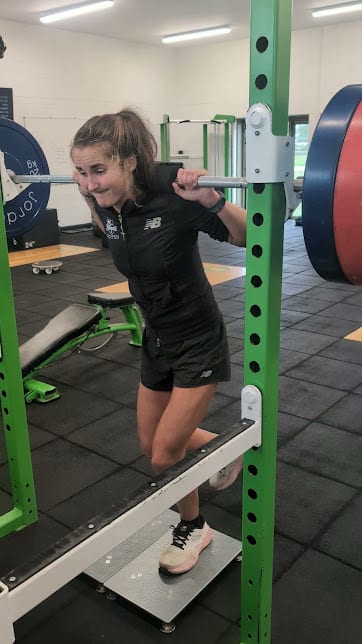
Velocity-based training (VBT) monitoring ensures every lift is performed at the right velocity and intensity to develop strength, power and rate of force development.
Hands-on coaching ensures athletes develop clean, efficient movement patterns — from the gym floor to the pitch.
Each stage below is a gate — athletes progress through the pathway by meeting objective criteria, not the calendar.
All gates cleared — a data-backed, durable return to the pitch.
For athletes recovering from surgery, post-operative rehabilitation is seamlessly integrated with our performance testing to ensure every stage of recovery is guided by objective data. You will have access to all the data to show your progression through the rehab process.
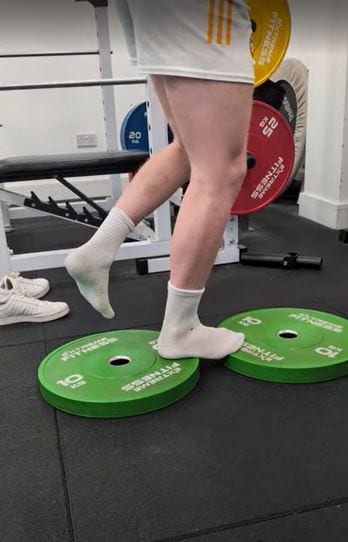
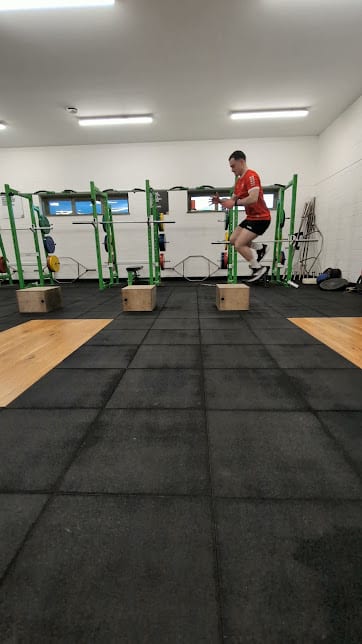
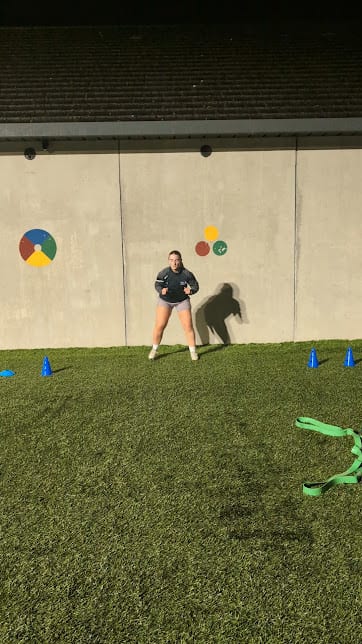
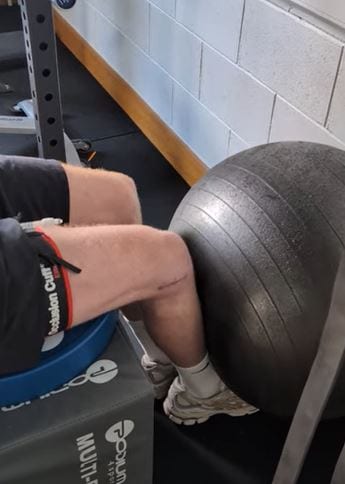
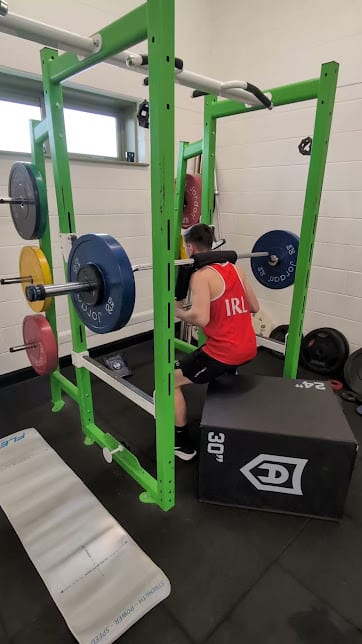
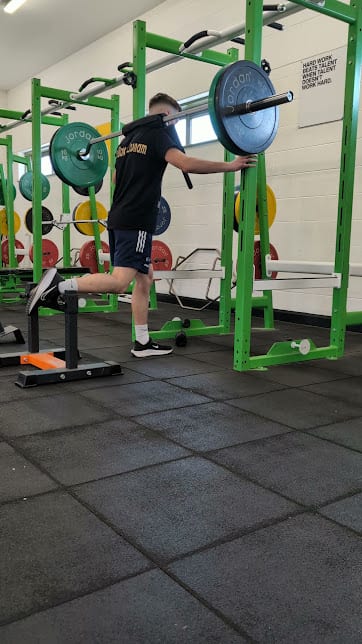
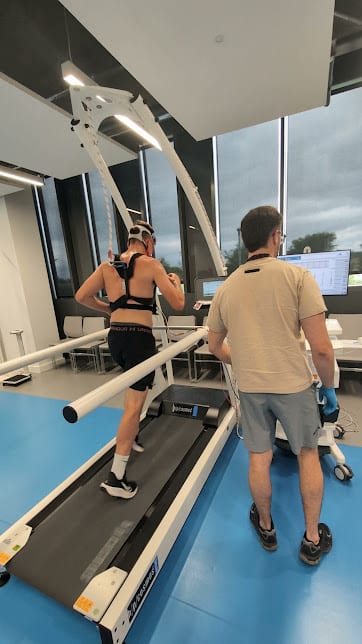
Once patients hit certain criteria such as <10% limb asymmetry in strength and jump profiling, the focus really switches to how the athlete moves dynamically. The clinic uses advanced technology to analyse key movement patterns that are part of the game:
We coach to optimise performance and reduce injury risk.
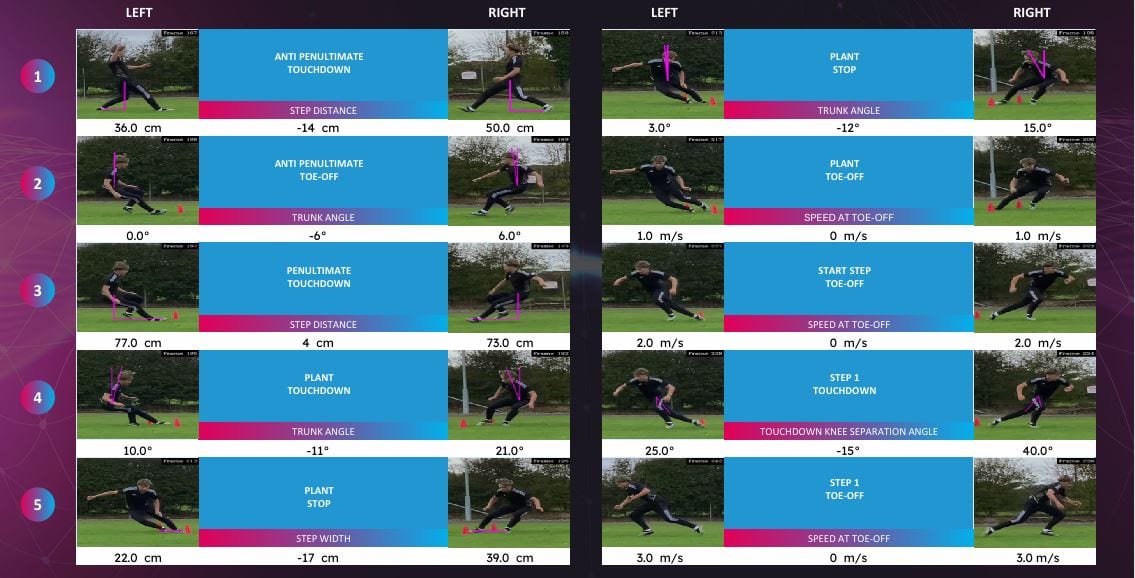
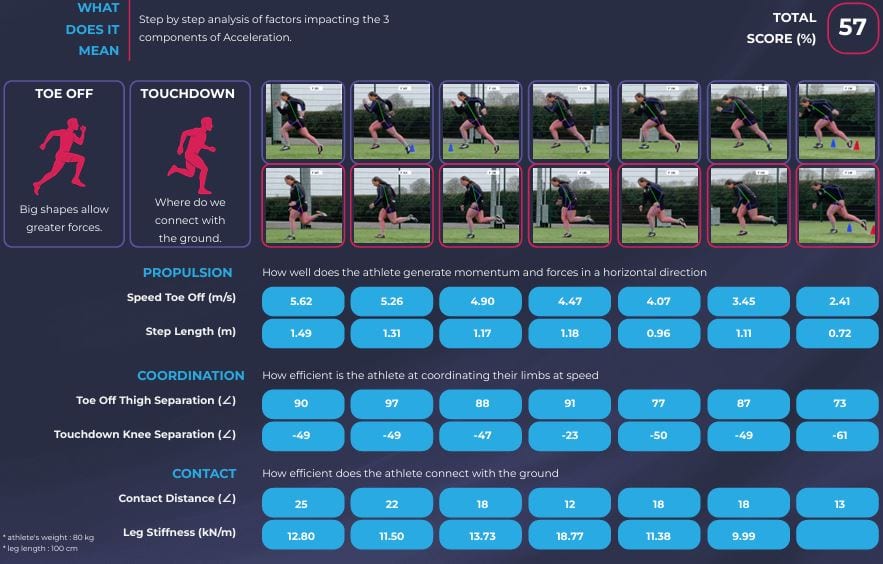
.jpg)
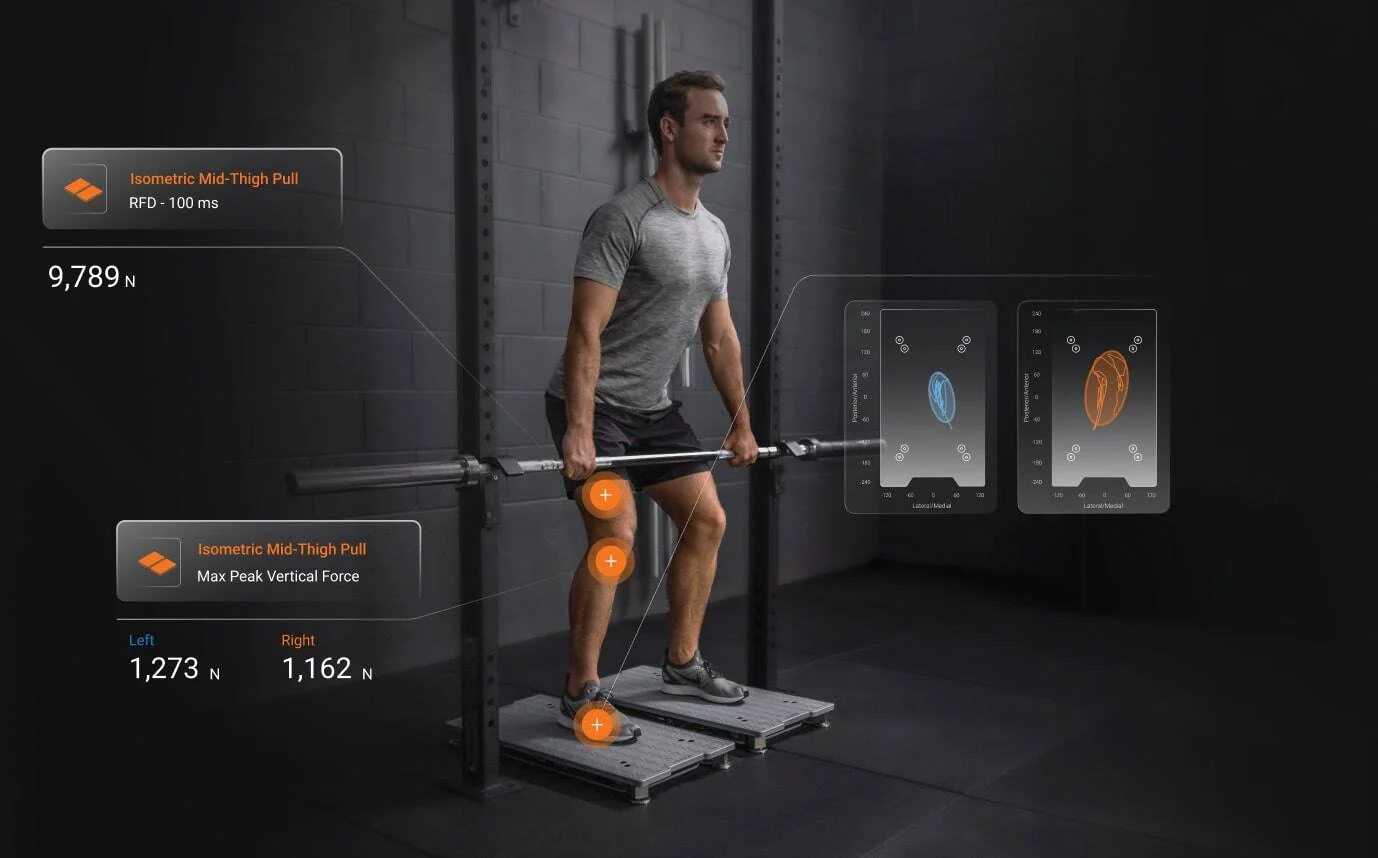
Dual force plate system for jump testing, countermovement jump (CMJ), single-leg CMJ, and isometric mid-thigh pull (IMTP) — measuring peak power, reactive strength index, and inter-limb asymmetry.
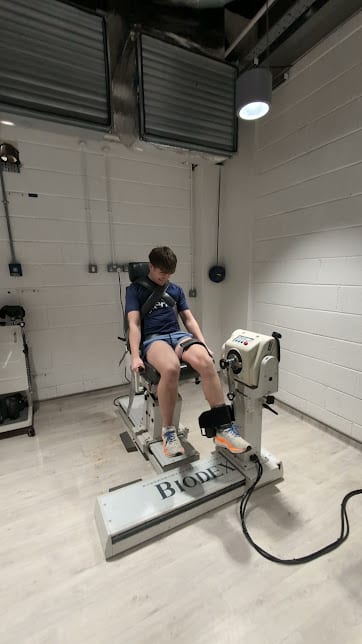
Isometric strength testing across multiple joint angles for the hip, knee, and groin — providing objective limb symmetry data to guide rehabilitation progressions.
Eccentric hamstring strength testing — measuring peak force and inter-limb asymmetry to ensure hamstring readiness for sprinting and change of direction.
Bar speed monitoring to guide load and intensity — ensuring athletes are training at the right velocity and effort to develop strength, power, and rate of force development.
Biomechanical software for detailed movement analysis — identifying movement errors in jumping, landing, cutting, and change of direction that may increase injury risk.
Sprint and change of direction timing — measuring acceleration, max sprint speed, and agility performance to track readiness for return to sport.
The clinic also integrates a performance psychologist to help assist with fear and return to play. This ensures athletes are not only physically prepared but mentally prepared to return to sport — better than before.
The ACL-RSI (Return to Sport after Injury) scale is used to assess confidence, fear of reinjury, and emotional readiness. The criteria is a score of ≥65 for ACL populations. Athletes who are physically ready but psychologically hesitant are at significantly higher risk of suboptimal performance and re-injury — which is why psychological readiness is treated as an essential pillar of the return to sport process, not an afterthought.
Whether you are recovering from ACL reconstruction or managing a conservative ACL injury, our clinic in Tullamore, Co. Offaly provides structured, data-driven ACL rehabilitation and return to sport testing for athletes and active individuals across Tullamore, Offaly and the Midlands.
Book an Appointment Online