
Hamstring Injury Rehab
An all-systems approach — profiling the athlete, not just the injury.
Book a Hamstring AssessmentAn all-systems approach — profiling the athlete, not just the injury.
Book a Hamstring Assessment
Hamstring injuries are among the most common and most frustrating injuries in sprint-based sport — and re-injury rates
remain high when rehabilitation stops at "pain-free". The athlete ultimately has to tolerate high-speed running, sprinting, deceleration, fatigue
and decision-making, and a rehabilitation plan must be built around that reality.
At Physio Tullamore we take an all-systems approach to hamstring rehabilitation: identify the exact tissue injured, grade the injury objectively, profile the whole athlete across movement, strength and workload, and rebuild towards return to performance — not simply return to play.
Not all hamstring strains are the same. Accurate classification drives prognosis.
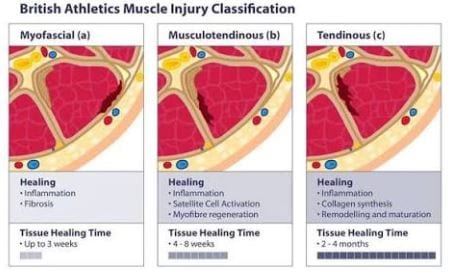
The British Athletics Muscle Injury Classification (BAMIC) is an MRI-based system that grades hamstring muscle injuries according to anatomical site (a/b/c), extent of injury (grade 0-4) and the cross-sectional area of injury. Because each of these factors is measured objectively, BAMIC grading has been shown to predict prognosis and expected time to return to play — giving rehab a genuine starting point instead of a guess.
Identifying the correct tissue injured — intramuscular tendon, myofascial (muscle) or bone — is critical, because tissue type and site dictate healing times and prognosis. Proximal versus distal intramuscular tendon involvement matters, as does whether the injury is in the free tendon or at the musculotendinous junction. Two injuries of identical "severity" can carry very different healing timelines purely because of where and in what tissue they occur.
This is why we never treat a hamstring injury as a single diagnosis. Grading and tissue identification shape the expected healing timeline, the pace of loading, and the milestones used to progress every stage of rehabilitation.
MRI and dynamic ultrasound answer different questions — we use both.
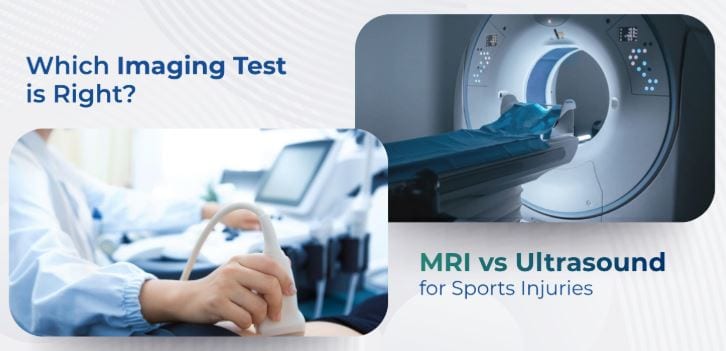
MRI is our baseline tool: it grades and classifies the injury using BAMIC — confirming the muscle involved, the anatomical site, the extent of injury and the cross-sectional area affected. This objective baseline anchors the expected healing timeline and the rehabilitation plan that follows.
Dynamic (real-time) ultrasound reassesses the tendon and muscle under load and through range as healing progresses. It shows us healing progression, scar tissue formation and how the tissue behaves under tension — information a static scan cannot provide.
Combining both modalities informs the safe progression of rehabilitation milestones and the decisions around return to running and return to sprinting — progression is based on how the tissue is actually healing, not on the calendar alone.
Profiling the athlete, not just the injury. Each layer of the profile tells us where risk sits and what rehabilitation must address.
We assess comprehensive range of movement — hip, knee, lumbopelvic and neural mobility — and map the individual's hamstring anatomy: biceps femoris, semitendinosus and semimembranosus, including whether involvement is proximal or distal. Knowing which muscle and which site is injured shapes the expected healing time and the loading plan.
The lumbopelvic region strongly influences hamstring function and load. Anterior pelvic tilt and poor lumbopelvic control change hamstring length-tension relationships and increase eccentric demand — placing the muscle under greater strain with every sprint. We assess how posture and control behave in static positions and in motion.
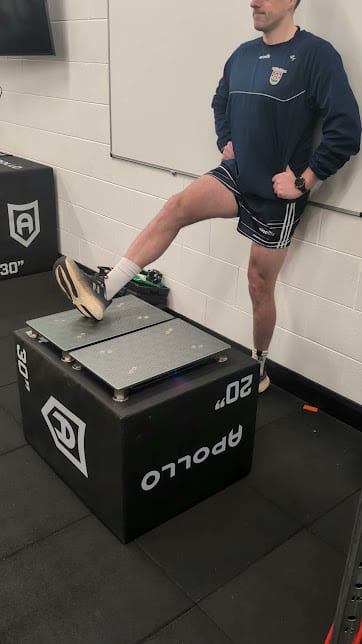
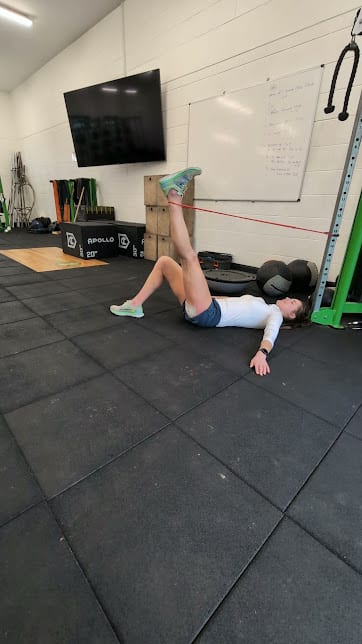
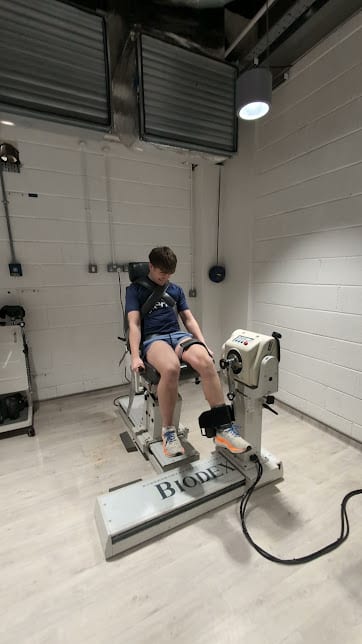
We test the distal and proximal hamstring tissue directly: the 90/20 hamstring test, and NordBord testing for eccentric strength and left-right asymmetries. This sits alongside assessment of the global muscle systems that support sprinting — all measured using VALD performance technology.
Measured with VALD technology (ForceDecks and NordBord): how quickly force is produced, not just how much. Sprinting happens in milliseconds — an athlete can be strong on the chart yet still unable to generate force fast enough to protect the hamstring at top speed.
We analyse how the athlete accelerates, decelerates, sprints and changes direction — in-depth movement analysis software combined with the coach's eye. Technique under speed and fatigue often reveals the exposure that testing alone cannot see.
Chasing a ball, when to sprint, positioning under fatigue — the choices an athlete makes influence injury exposure and risk. We look at when and why the hamstring is asked to work at its limit, not only whether it can.
We build a picture of the whole athlete and develop all aspects of performance and robustness — not just the injured tissue. Rehabilitation is used as an opportunity to return the player better, stronger and more resilient than before the injury.
We review global training workload and recovery between sessions — acute:chronic load concepts, managing spikes, and ensuring adequate recovery. Most re-injuries happen when load rises faster than the tissue and athlete have been prepared for; managing that curve is central to reducing reinjury risk.
Profile the athlete, not just the injury. The tissue heals on a timeline — performance is rebuilt across every system.
Hamstring injuries are rarely one isolated issue. In our experience they are usually a combination of the factors above — tissue capacity, movement quality, lumbopelvic control, force production, decision-making and workload management. Profiling across all systems allows us to target the true drivers of the injury rather than chasing symptoms, so players return to sprinting, changing direction and competing with confidence.
The same systems-based thinking underpins our wider sports rehabilitation work, including ACL management and the screening and testing behind our performance testing service.
If you are carrying a hamstring injury — or have been injured before and want to reduce your reinjury risk — we can help. Physio Tullamore provides physiotherapy and sports rehabilitation from our clinic in Tullamore, Co. Offaly, serving athletes across Offaly and the Midlands. Contact us to book a hamstring assessment and start rebuilding towards return to performance.
Book a Hamstring Assessment