
Improving Swing Speed in Golf
Clear, evidence-backed steps to add club head speed — strength, explosivity, flexibility and speed sessions, and why skill training must always come first.
Book a Performance AssessmentIntroduction
The Pursuit of an Extra 20 Yards
Club head speed in golf has been a huge factor in performance for the past 3 decades. However, in recent years it has become an obsession of the entire golfing community — the pursuit of an extra 20 yards onto a player's drive is something we all universally feel will get us those few extra strokes off the handicap. With all the commotion in this space, social media has been flooded with tips and tricks, products and programmes, and to the amateur golfer the answer is as clear as mud. This article was made to provide clear steps that are backed by scientific evidence to increase your club speed.
There are multiple variables that are attributed to the speed of a golf swing. Height and wingspan are factors that we can't change (unfortunately), but as we can see with golfers such as Rory McIlroy standing at 5'8", this is not the be all and end all. Factors such as overall lower limb strength, jump explosivity, upper limb explosivity and flexibility have more important parts to play. By training these four aspects of force production and transfer, gains in club head speed are inevitable.
Research points to jump explosivity having the most significant association with club head speed of the four factors mentioned above. Whilst it is true that mass moves mass and going down the DeChambeau route of gaining 30lbs of muscle will increase speed, there is a reason why Min Woo Lee can swing the same speeds weighing 70lbs less — by having elite level explosive power in his lower and upper body he can make up for the lower body strength that 70lbs of weight grants DeChambeau.
Flexibility has its place in the swing to a certain point. We need to have sufficient thoracic mobility to achieve a full shoulder turn, however much more results in overswinging and the loss of balance at the top of the backswing. This loss of balance means force produced by the lower body in the downswing cannot be transferred effectively, resulting in lower club head speed.
Written by Christian Coombs and Liam Donoghue — Physio Tullamore, Co. Offaly

What Actually Drives Speed
The Four Factors You Can Train
Forget height and wingspan — the research points to four trainable qualities that have the biggest influence on club head speed. Jump explosivity shows the strongest association of the four, but gains come fastest when all four are developed together.
01
Lower Limb Strength
The force foundation. Strong, multi-joint lower body strength underpins everything else in the swing.
02
Jump Explosivity
The strongest single association with club head speed in the research. Rate of force production is king.
03
Upper Limb Explosivity
Elite explosive power in the upper body transfers force from the ground through to the club head.
04
Flexibility
Sufficient thoracic mobility for a full shoulder turn — but not so much that balance is lost at the top.
What Amateurs Can Do
Train Like an Athlete
Golf has a reputation that anyone can play it to a high standard — it has that reputation because it is true. Golf is a game that is for the majority skill based, but adding in training that will add length to your game to work in tandem with the skill-based training you're doing on course will not 'ruin' your golf game as is often thought. Take this year's Open Championship winner Ryan Fox — if he can bench 135kg and play golf the next day, you can certainly incorporate some gym work into your golf training.
Building Lower Body Strength
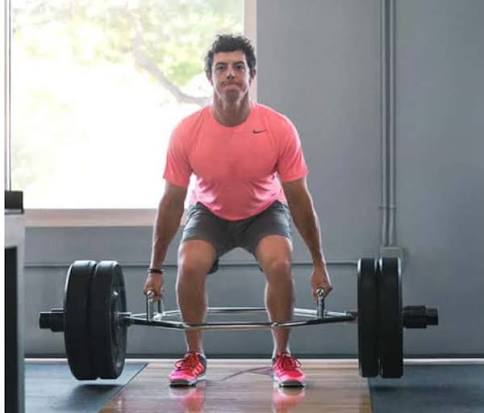
To increase overall power output, we look at the two factors of power: force and velocity. For force we are looking to build strength in the
lower body — specifically we want to build strength in multi-joint movements (compounds) such as squat variations, as opposed to isolated
exercise patterns, as these better replicate (although not perfectly) the movement demands of the golf swing.
Building Lower Body Explosivity
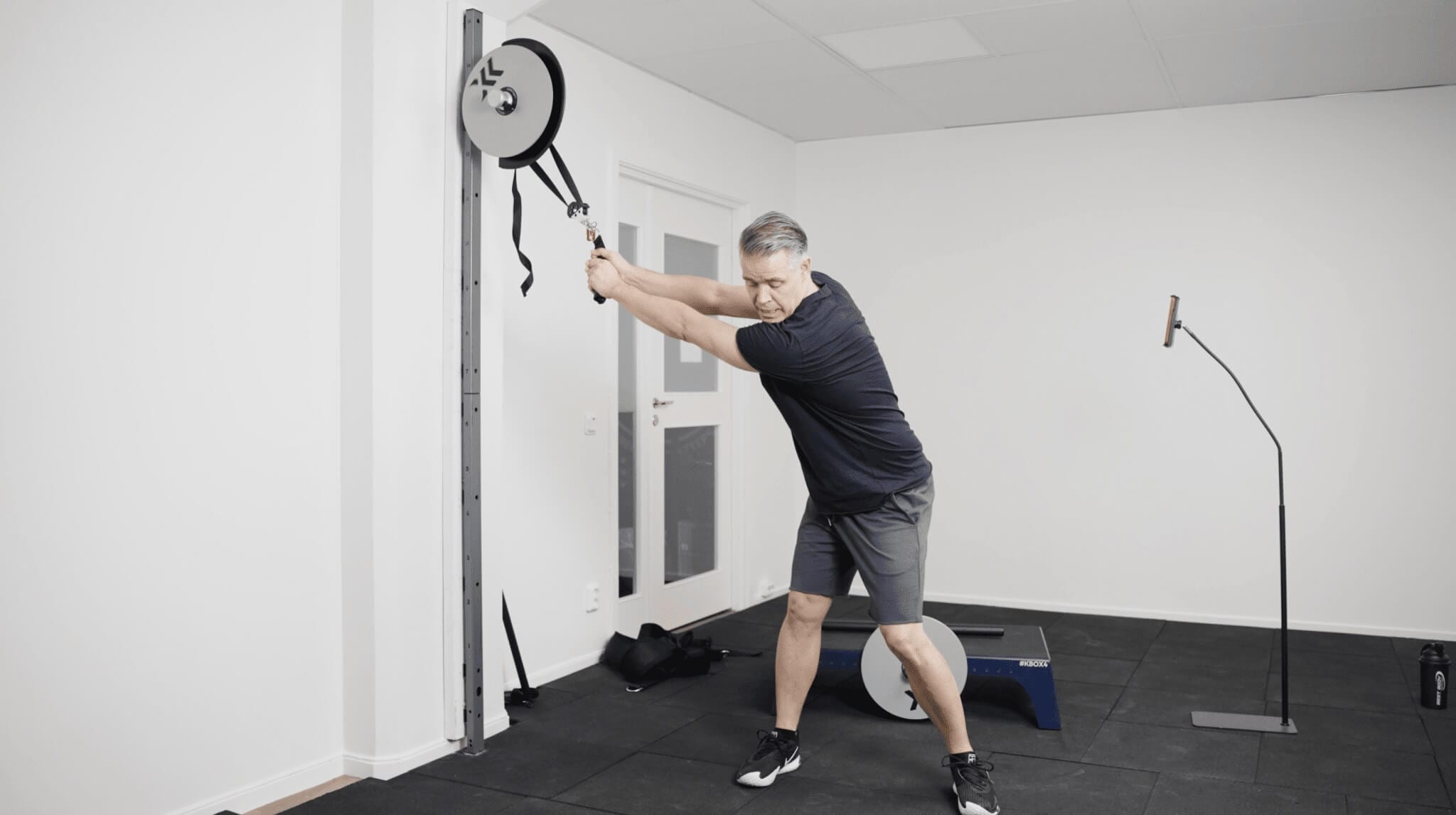
Next, we look at velocity — we are looking to improve our rate of force production. To do this we must incorporate plyometric exercise into
our regimen. Exercises such as box jump variations, broad jumps, and velocity-based training with squats and deadlifts. We can also utilise
medicine ball slams in the golfing posture — replicating the movement of the swing then throwing the ball with intent toward the target. By
increasing the rate at which we can produce forces into the ground, we can maximise the output to the club head in the short time frame of
the downswing.
A Closer Look at Velocity-Based Training
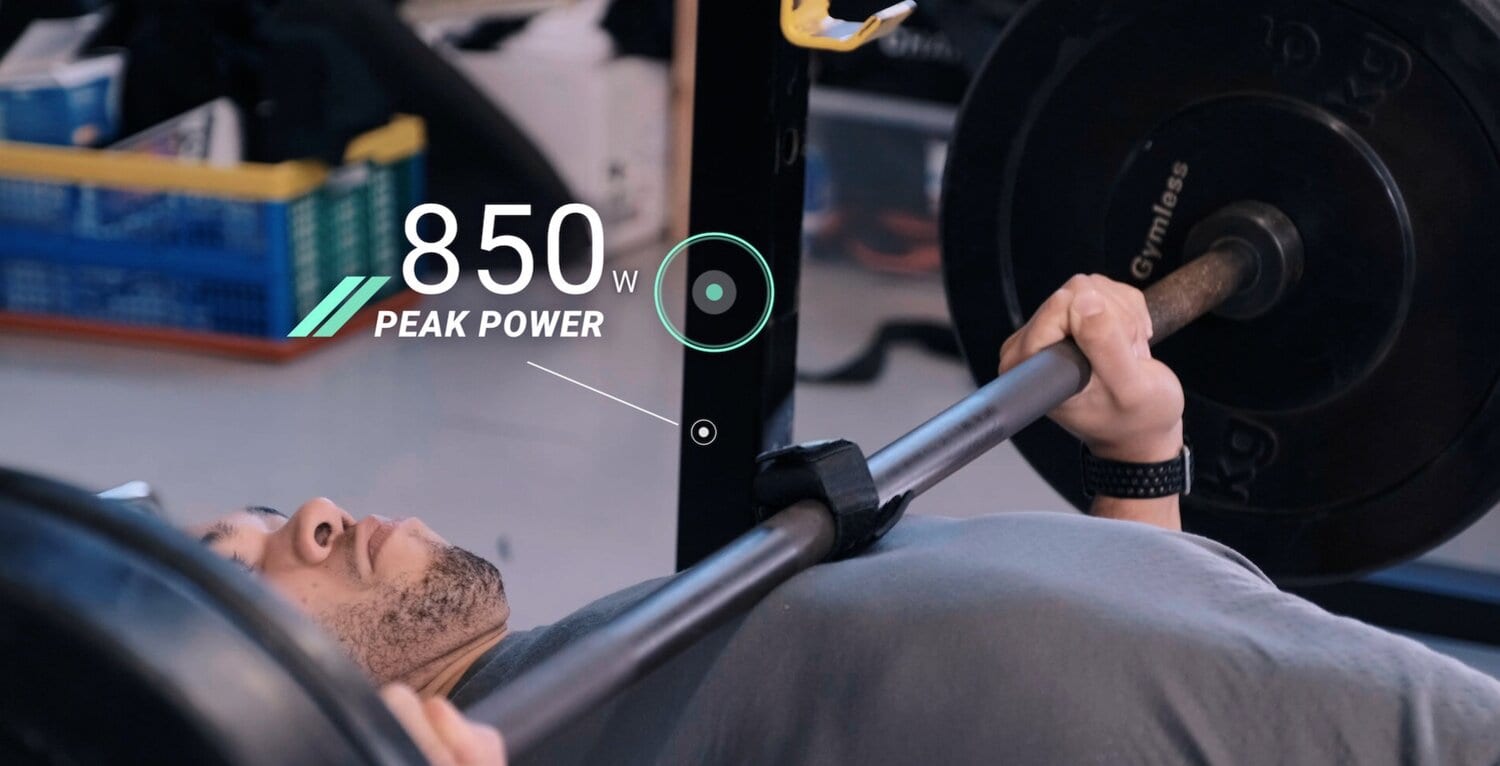
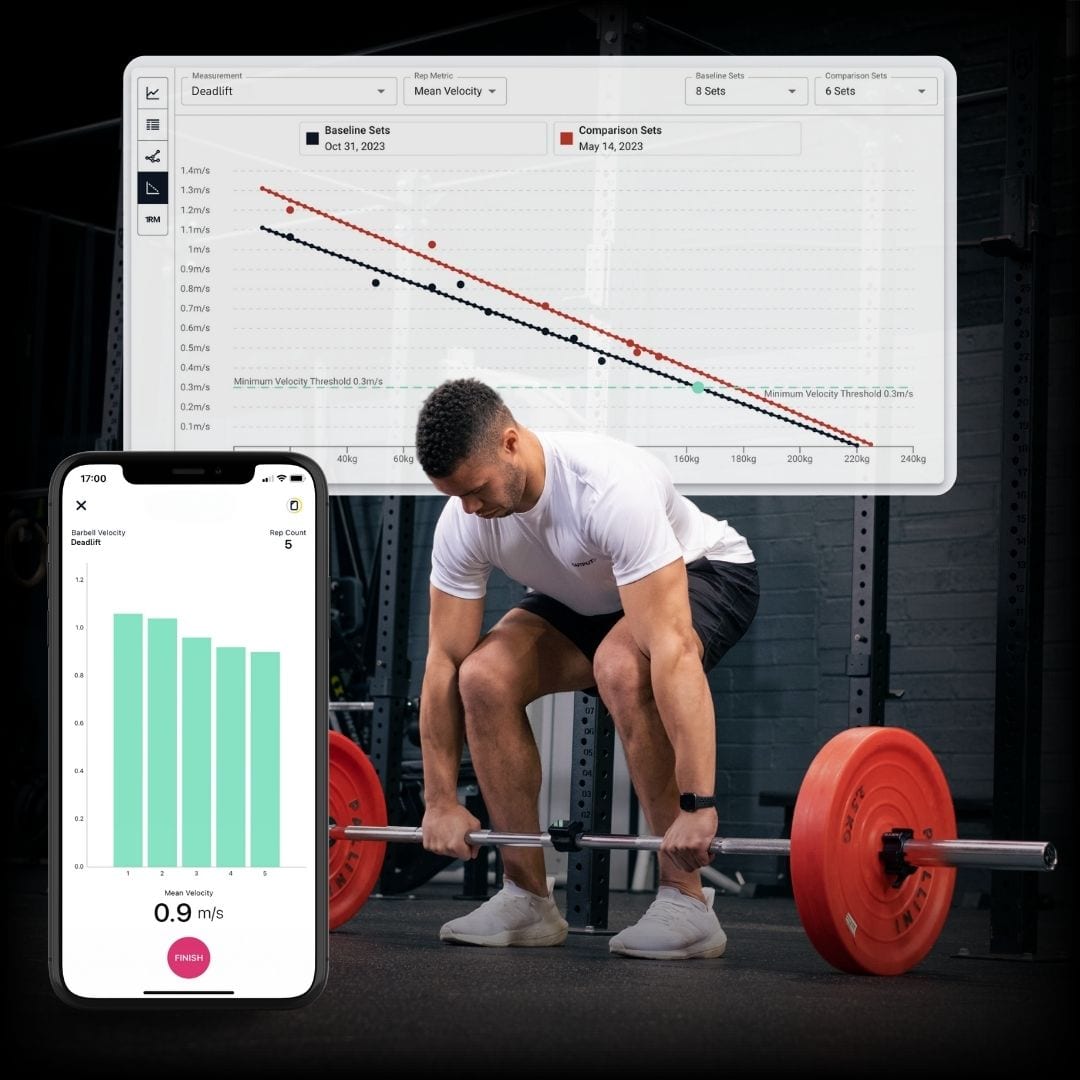
Velocity-based training (VBT) deserves a closer look, because it sits at the exact meeting point of the force and velocity qualities above. Rather than training to a fixed weight, VBT uses a linear transducer or accelerometer app to measure how fast the bar actually moves on every rep — typically as metres per second. If the bar speed drops below your target zone, the load or the set ends; if you're beating your target speeds consistently, it's time to progress. This means every rep is performed with maximum intent, which is precisely the quality the golf swing demands.
For golfers, VBT is particularly useful with trap-bar deadlifts, squats and weighted counter-movement jumps in the 0.5–1.0 m/s velocity zone, where power output is maximised. It also autoregulates for you: on days where you're fatigued, bar speed tells the truth and the load self-adjusts — protecting you from grinding through heavy, slow reps that build soreness rather than speed. You don't need pro-level kit to start, either — affordable pocket radar units and phone-based apps now make bar-speed feedback accessible for any amateur serious about adding club head speed.
Flexibility
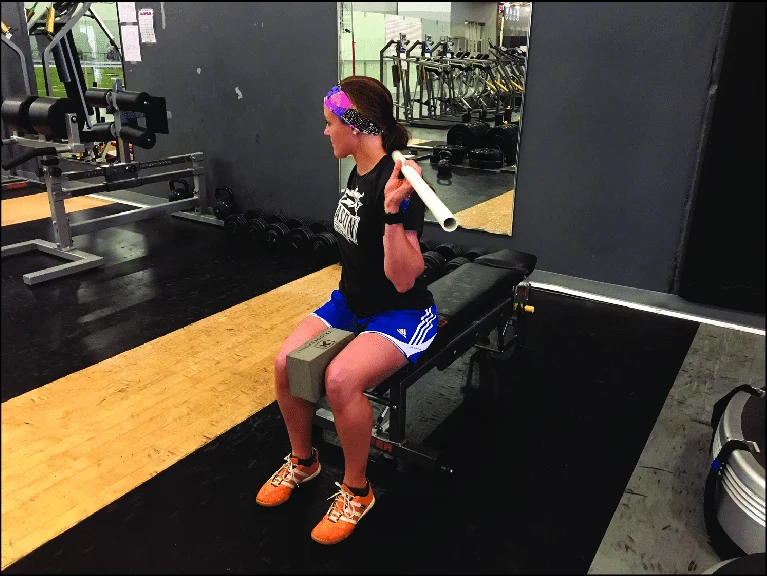
As mentioned previously, thoracic mobility is essential for achieving the full shoulder turn and creating more width in the swing. This
added length of the swing allows for a greater time to create and transfer the force to the club head. This can be done with seated thoracic
PNF stretching with a stick. We do this stretching movement seated to isolate the mobility of the thoracic spine — the essential movement we
are targeting for the golf swing.
Speed Sessions
To tie all this together into the golf swing, and train the body's nervous system to swing faster, amateurs can add a speed session into their weekly routine. Take 20–30 balls at the driving range and swing as hard as you can. For this activity disregard the ball's flight — we are purely getting the body accustomed to swinging faster than usual. Complete one of these sessions a week.
Training at the Professional Level
What the Tour Pros Are Doing
Focus on strength and power training has become an essential aspect of the professional game in recent years, with players realising that distance isn't just for show anymore — and the numbers observed from Mark Broadie's strokes gained statistics don't lie. The same principles of combining strength and power training, with a session focusing purely on mobility, can be seen in the weekly routine of Rory McIlroy.
0
Strength Sessions
0
Power Sessions
0
Mobility Session
This consistent routine is evident when we look at not only the speed at which he can get up to, but also the longevity of his performance at this level. Now while most amateurs do not have the time to commit to a weekly routine to the level of touring professionals, there are things we can learn and use from them. If an amateur golfer could dedicate 2 evenings a week — one for strength and one for power — they would soon notice a few miles per hour ticked onto their swing.
Skill First, Always
The Importance of Prioritising Skill Training
Speed without precision in golf is useless. Without the upkeep of honing the ball striking aspect of the golf swing, speed will only
increase the margin for error. It is paramount that strength and power training is used only to supplement the skills of the game.

Inside the Clinic
What a Golf Performance Assessment Looks Like
Curious what actually happens in a golf performance assessment at Physio Tullamore? Here's how we find your biggest speed limiter — and each component links through to more detail on how we test it.
01
Mobility Screening
Cervical, thoracic and lumbar spine screening to find the restrictions limiting your shoulder turn and force transfer.
02
Strength & Power Testing
Velocity-based strength tests on compound lifts — bar speed tells us exactly where your force production sits.
03
Force Deck Testing
VALD ForceDecks measure your rate of force development and explosive jump profile.
04
Swing Speed Benchmarking
A measured club head speed baseline with Trackman would be very beneficial to get the key metrics of ball speed / spin / swing speed.
Your Individualised Plan
All of your results are compiled into one prioritised programme targeting your biggest limiter first — delivered through our High Performance Consultancy.
Book a Golf Performance AssessmentKey Takeaway
Speed Is Built, Not Bought
There is no shortcut in a bottle or a gadget: build lower limb strength with compound lifts, develop explosivity with plyometrics and
intent-based throws, keep your thoracic mobility sufficient but not excessive, and add one dedicated speed session a week — all while your
skill work on the course continues as priority number one. Do this consistently and gains in club head speed are inevitable.