
Injection Therapy Tullamore
Landmark-Guided Corticosteroid & Local Anaesthetic Injections
Book a Injection Therapy Assessment in TullamoreLandmark-Guided Corticosteroid & Local Anaesthetic Injections
Book a Injection Therapy Assessment in Tullamore
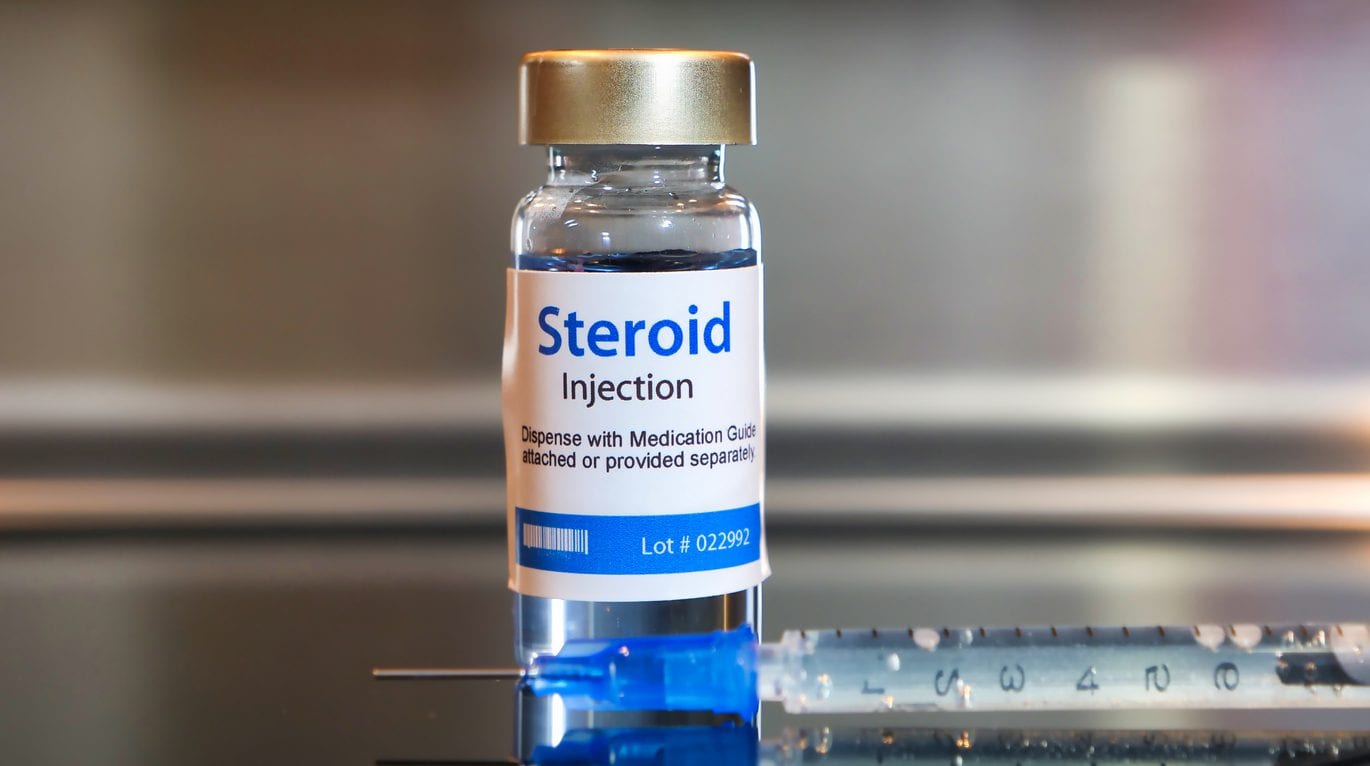
At Physio Tullamore, we provide landmark-guided corticosteroid and local anaesthetic injections for selected musculoskeletal conditions affecting the shoulder, elbow, wrist, hand, hip, knee, ankle and foot.
Injection therapy can be particularly useful when pain or inflammatory symptoms are limiting movement, sleep, work, exercise or progression through rehabilitation.
Our approach is not simply to inject a painful area. Every injection begins with a clinical assessment to establish whether injection therapy is appropriate and how it fits into your wider treatment and rehabilitation plan.
Where appropriate, reducing pain can create a valuable window for movement, strengthening and rehabilitation, helping you progress towards normal daily activity, exercise or sport.
Landmark-guided musculoskeletal injection therapy uses a detailed knowledge of anatomy together with identifiable anatomical landmarks to accurately locate the structure being treated.
Following clinical assessment, a fine needle is used to deliver medication to an appropriate joint, bursa, tendon sheath or selected soft-tissue structure.
Unlike ultrasound-guided injections, landmark-guided injections do not require real-time ultrasound imaging during the procedure.
They are established techniques for a range of appropriately selected musculoskeletal presentations.
Before recommending an injection, your clinician will consider:
Injection therapy will only be recommended when the clinical assessment indicates that it is an appropriate option.
Corticosteroids are medications with a strong anti-inflammatory effect.
They may be used in selected musculoskeletal conditions where pain and inflammatory symptoms are associated with a joint, bursa, tendon sheath or surrounding soft tissue.
The aim is primarily to reduce pain and irritation, potentially allowing better movement and greater tolerance of rehabilitation.
Corticosteroid injections are not designed to regenerate tissue or permanently correct the underlying cause of every musculoskeletal condition.
The amount and duration of symptom relief varies between patients and between conditions.
A local anaesthetic may be administered alongside the corticosteroid where clinically appropriate.
Its primary purpose is analgesia — temporary reduction of pain.
The local anaesthetic usually works considerably faster than the corticosteroid and can result in temporary numbness or a noticeable reduction in symptoms around the treated area.
This early analgesic response may also provide useful clinical information about whether the treated structure is contributing significantly to the patient's symptoms, although it is interpreted alongside the overall clinical assessment.
The local anaesthetic effect is temporary.
The corticosteroid component, where used, generally takes longer to exert its effect.
Persistent musculoskeletal pain can sometimes create a cycle:
For selected patients, injection therapy can help interrupt this cycle.
Reducing pain may allow you to:
move more comfortably
improve joint range of motion
sleep with less discomfort
tolerate exercise more effectively
progress strengthening
return to normal daily activities
improve work tolerance
progress physiotherapy rehabilitation
gradually return to running or sport where appropriate
This is why we view injection therapy as a potential facilitator of rehabilitation, rather than simply a stand-alone pain treatment.
Injection therapy may be considered for selected musculoskeletal conditions involving the upper and lower limb.
Suitability depends on the individual diagnosis and clinical assessment.
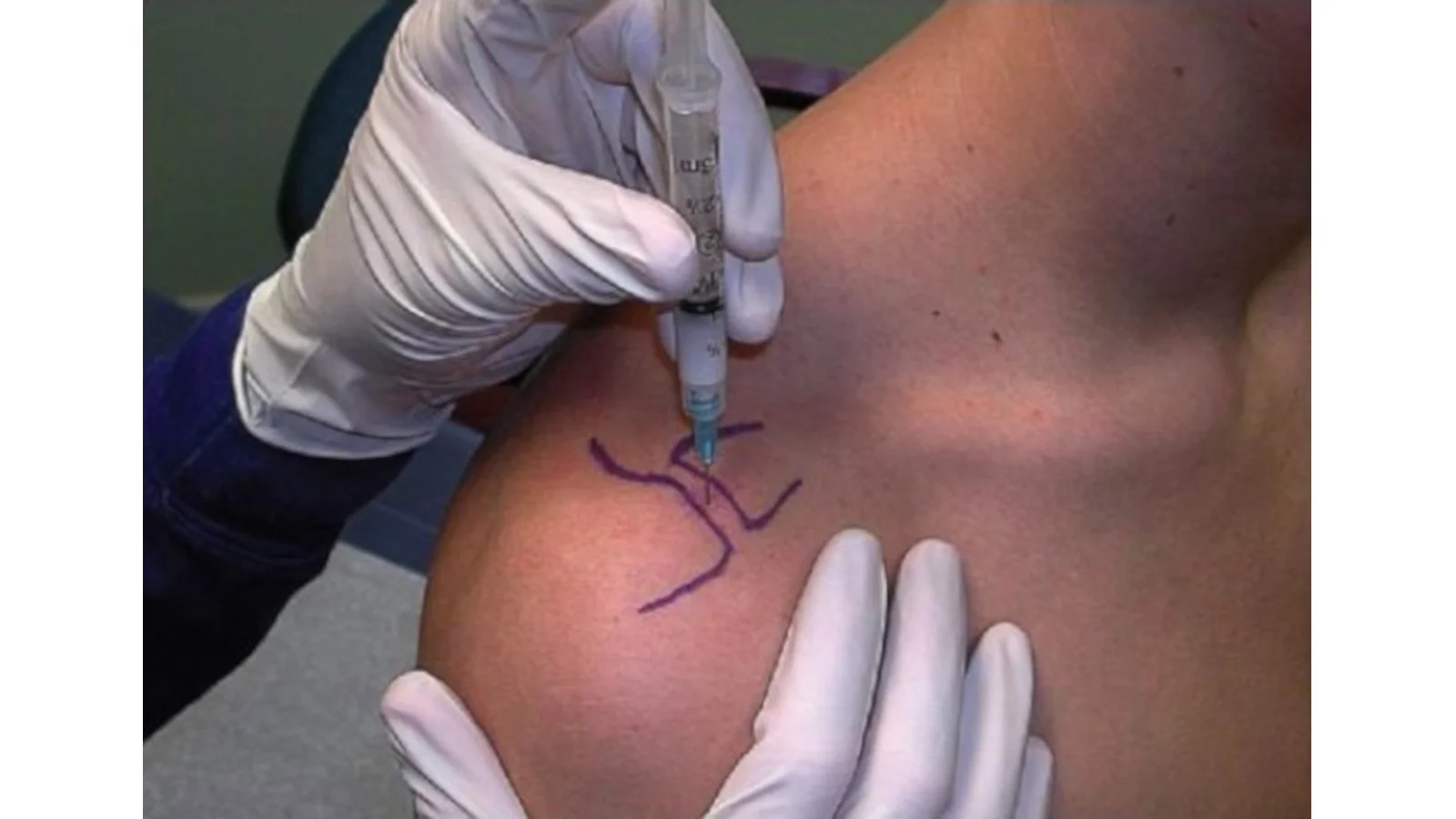
The acromioclavicular joint sits at the top of the shoulder where the collarbone meets the shoulder blade. Pain from the AC joint may be associated with degeneration, irritation or previous injury. An AC joint corticosteroid and local anaesthetic injection may be considered in selected cases where symptoms are persistent and consistent with the AC joint being the main source of pain.

The glenohumeral joint is the main ball-and-socket joint of the shoulder. Joint injection may be considered for selected painful or
inflammatory shoulder presentations where symptoms are thought to originate from the joint.
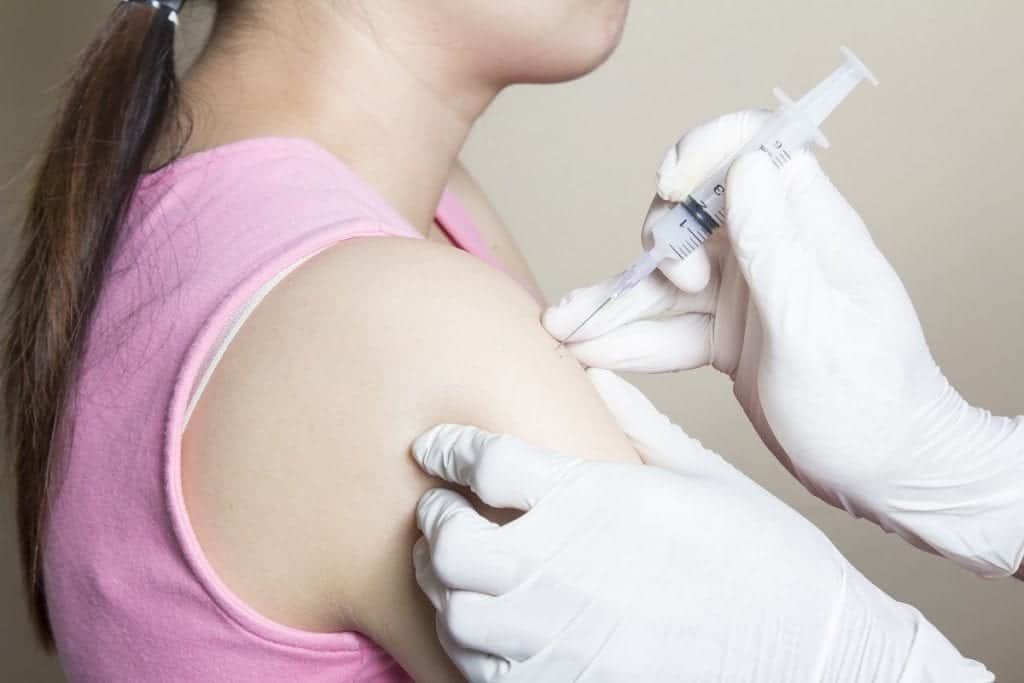
Frozen shoulder can cause significant pain followed by progressive restriction in shoulder movement. A corticosteroid injection may be considered particularly during the painful stages of the condition, alongside an appropriate mobility and rehabilitation programme. The aim is to reduce pain sufficiently to make movement and rehabilitation more tolerable
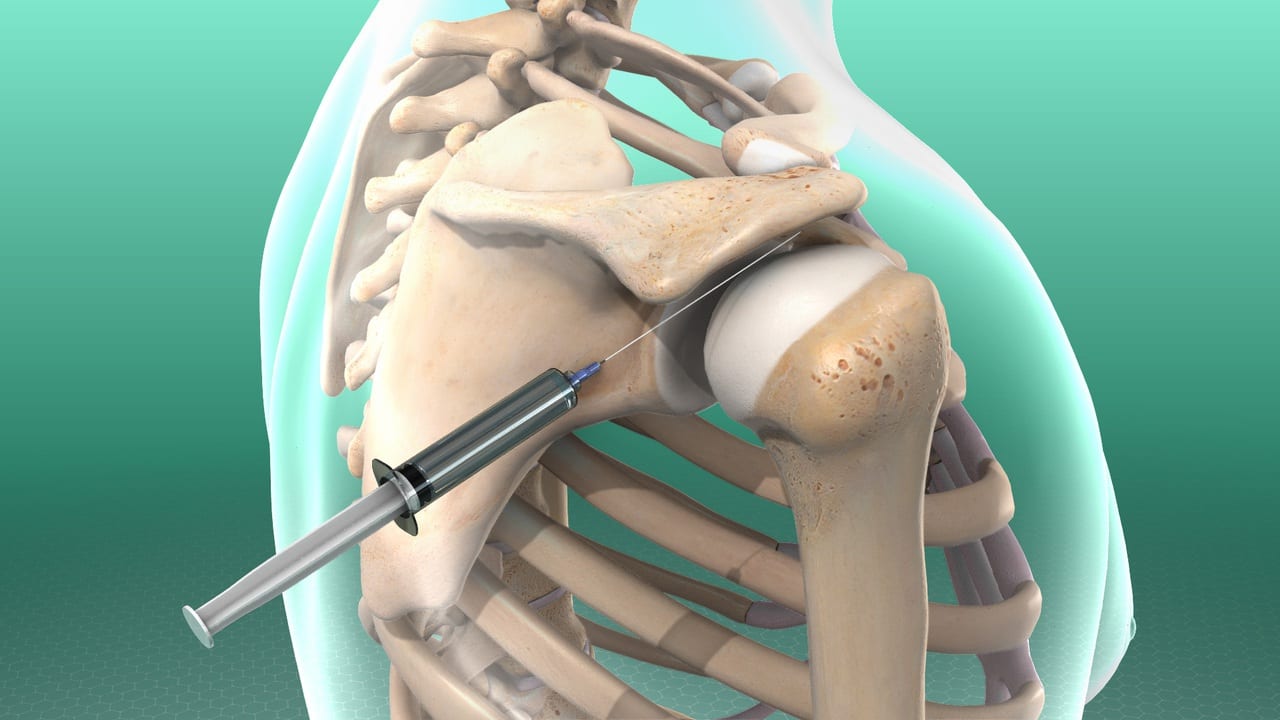
Subacromial pain can present as pain around the upper arm or shoulder, often aggravated by reaching or lifting the arm.
Injection therapy may be considered in selected cases following assessment. Rehabilitation remains important to address strength, shoulder
capacity and the activities contributing to symptoms
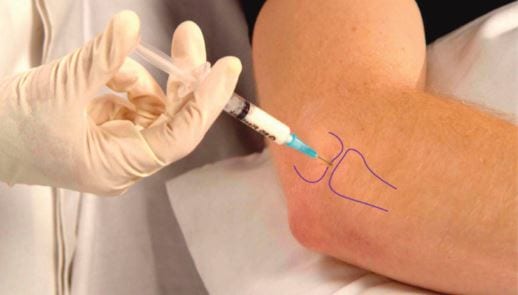
Joint injection may be considered for selected painful or inflammatory elbow joint conditions where conservative management alone has not adequately controlled symptoms.
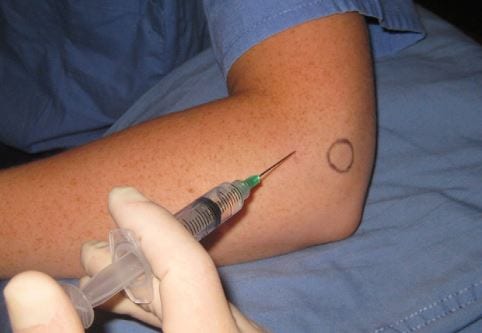
Tennis elbow causes pain around the outside of the elbow and can significantly affect gripping, lifting, work and sporting activities. Injection therapy may be considered in selected cases following discussion of the potential advantages and limitations. Importantly, corticosteroid injection is not automatically the preferred treatment for every case of tennis elbow, and progressive rehabilitation and loading remain central to longer-term management.
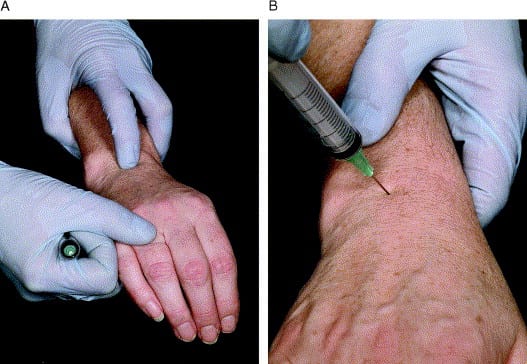
Corticosteroid injection may be considered for selected painful or inflammatory conditions affecting the wrist joint following appropriate assessment.
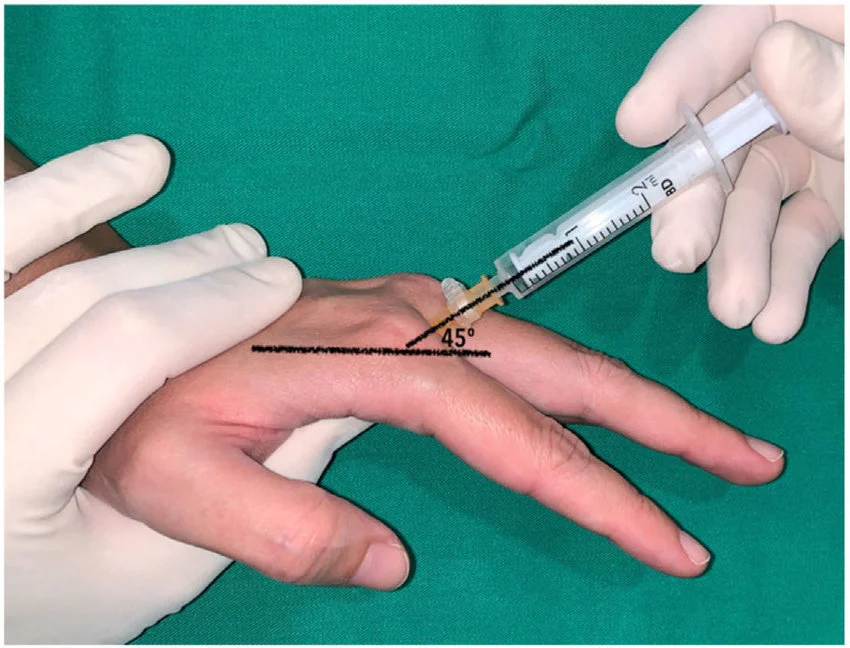
Selected painful or inflammatory hand and finger joint conditions may be suitable for landmark-guided injection therapy.
The precise target and suitability will be determined during your clinical assessment.
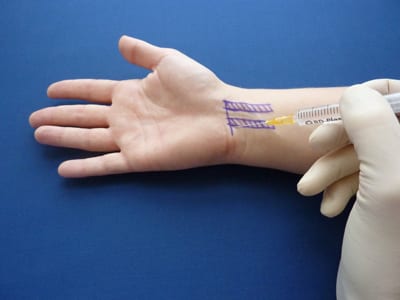
Carpal Tunnel Syndrome results from compression of the median nerve as it passes through the carpal tunnel at the wrist.
Corticosteroid injection may provide symptom relief in selected patients.
Patients with progressive weakness, severe neurological symptoms or more complex presentations may require further investigation or
specialist review.
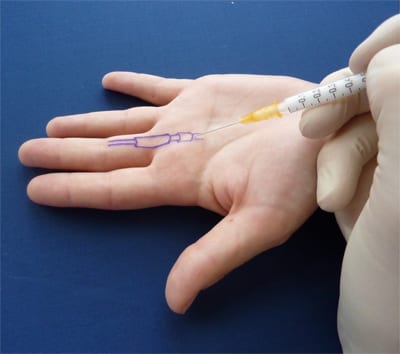
Trigger finger occurs when movement of a finger or thumb becomes painful, stiff or catches as the flexor tendon moves through its
sheath. Corticosteroid injection into the affected tendon sheath may be considered in suitable cases
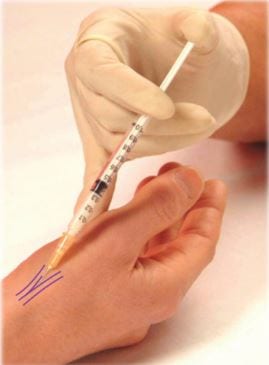
De Quervain's Tenosynovitis can cause pain around the thumb side of the wrist and is commonly aggravated by gripping, lifting and thumb
movements.
Injection therapy may be considered as part of management following clinical assessment.
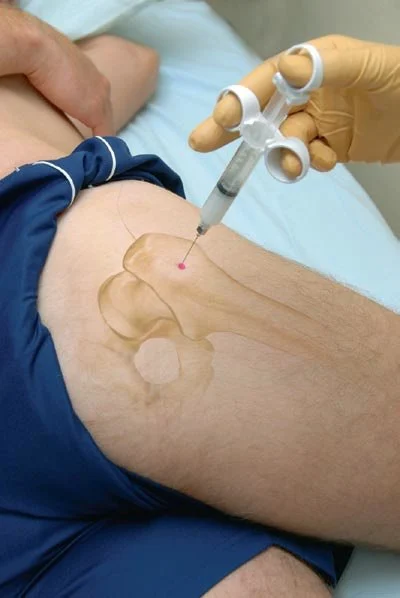
Pain around the outside of the hip is often described as trochanteric bursitis, although the broader term Greater Trochanteric Pain Syndrome (GTPS) is often more appropriate.
For selected presentations, corticosteroid injection may be considered to reduce pain.
However, longer-term treatment will often also involve progressive strengthening and management of the loads being placed through the hip.
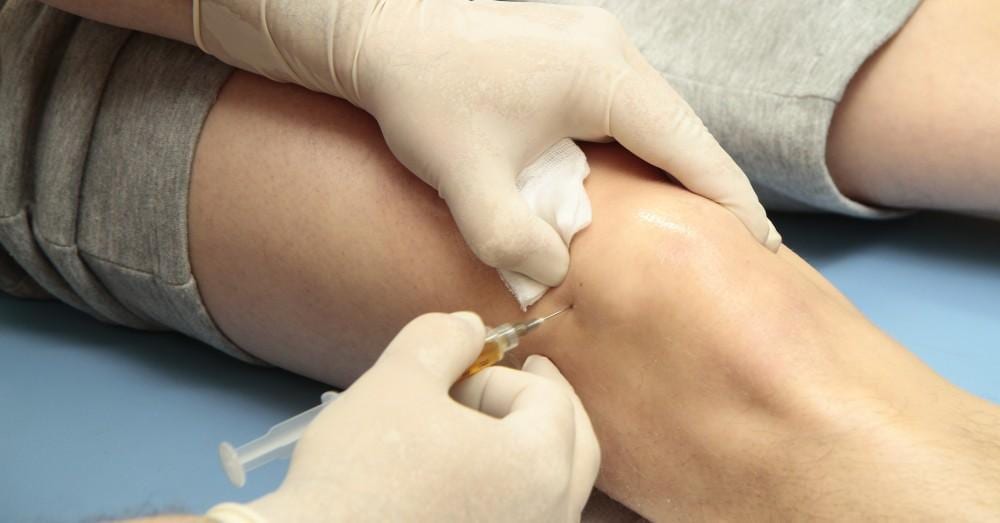
Knee joint injections may be considered for selected painful or inflammatory knee conditions.
One common indication is symptomatic knee osteoarthritis, particularly when pain is making activity and exercise difficult. Current
guidance describes intra-articular corticosteroid injections for osteoarthritis primarily as a short-term pain-management option,
rather than a long-term cure.
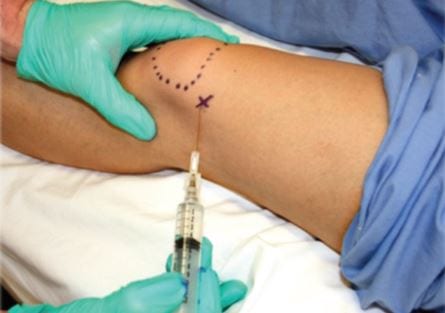
Patella joint injections may be considered for selected painful or inflammatory knee conditions.
One common indication is symptomatic chondromalacia patella, particularly when pain is making activity and exercise difficult.
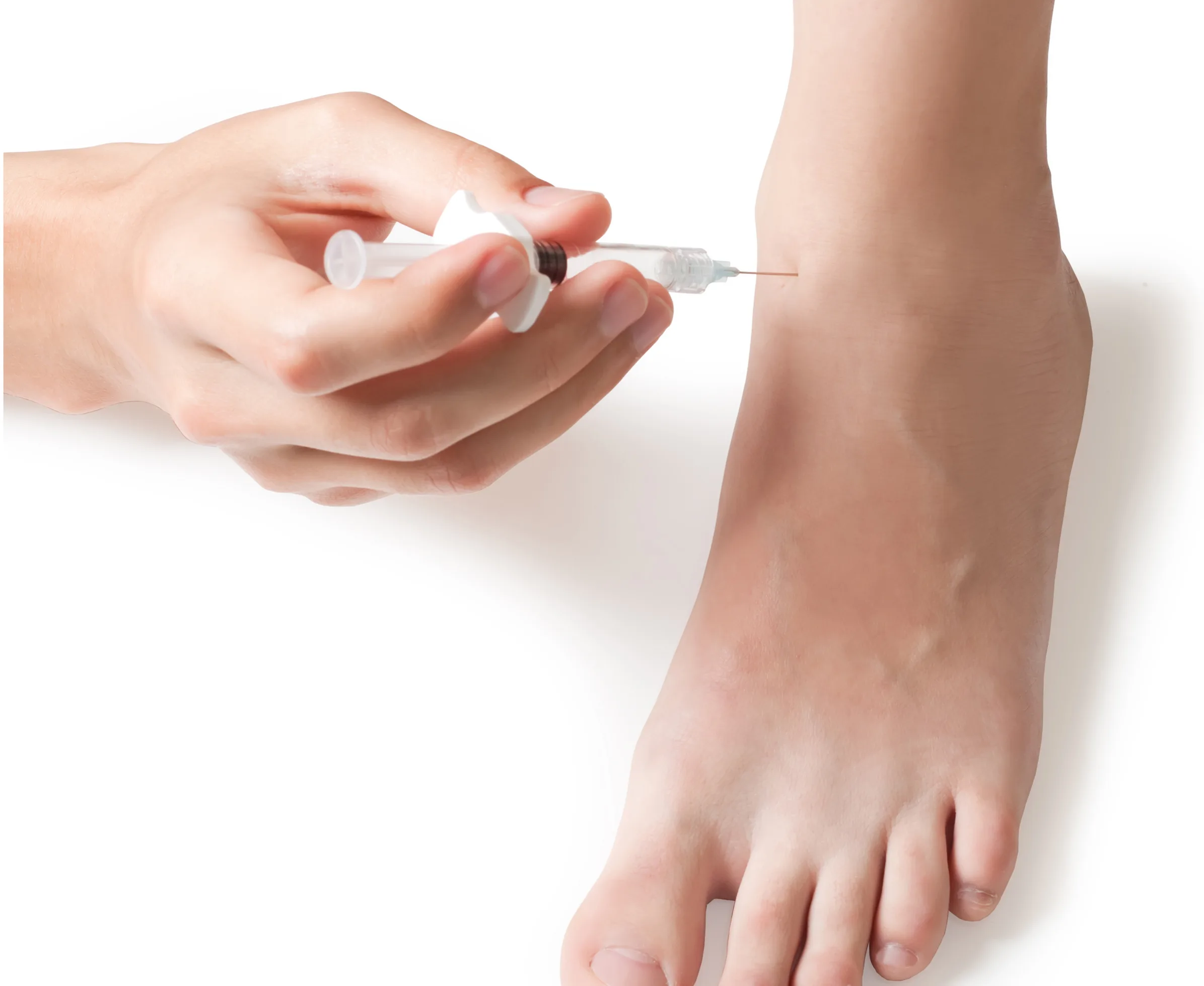
Corticosteroid and local anaesthetic injection may be considered for selected painful or inflammatory conditions affecting the ankle joint.
Assessment is important to determine whether symptoms are primarily joint-related or originate from surrounding tendons, ligaments or other
structures.
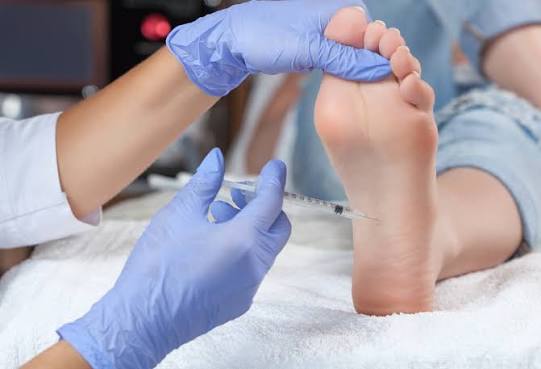
Plantar heel pain commonly causes pain underneath the heel,
Most cases are initially managed through load modification, footwear advice and progressive rehabilitation.
Injection therapy may be considered in selected persistent cases following clinical assessment and discussion of alternative options.
Where injections around tendon or fascial structures are considered, the potential benefits and tissue-related risks should be discusse
carefully.
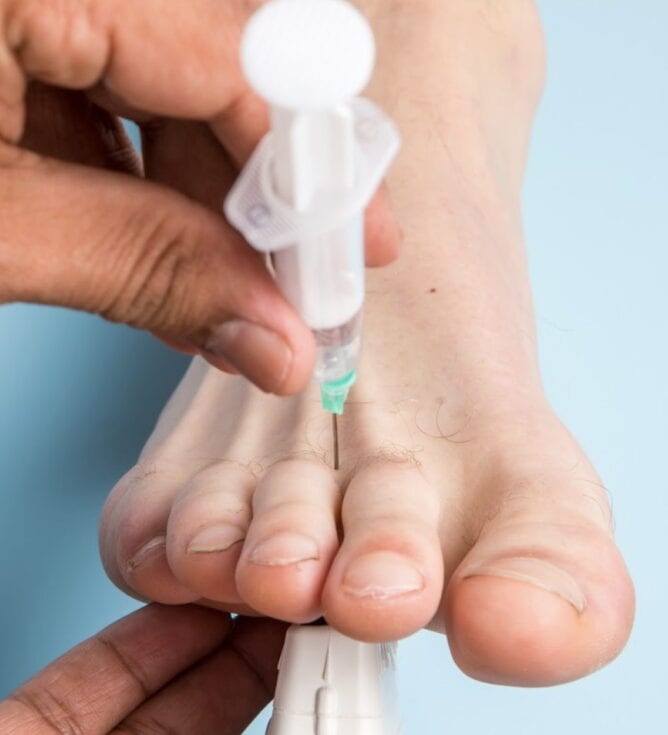
Morton's neuroma typically causes pain, burning, tingling or altered sensation around the forefoot and toes.Injection therapy may be
considered in selected cases when symptoms and clinical findings are consistent with Morton's neuroma.
Footwear modification and other treatment options may also form part of management.

One of the most useful effects of musculoskeletal injection therapy is analgesia — reduction in pain.
Persistent pain can make it difficult to exercise, restore movement and build strength.
Local anaesthetic can provide relatively rapid temporary pain relief around the treated structure.
Corticosteroid may then provide additional symptom relief over a longer period in appropriately selected conditions.
The aim is not simply to make the area feel better temporarily.
Where possible, we want to use this reduction in symptoms to help you move, exercise and rehabilitate more effectively
At Physio Tullamore, we don't view injection therapy in isolation.
Where appropriate, we combine symptom management with a structured rehabilitation plan.
Depending on your condition, this may include:
progressive strengthening
joint mobility
tendon loading
range-of-motion exercises
movement retraining
load management
footwear advice
gait assessment
return-to-running rehabilitation
return-to-sport progression
objective strength testing
This combination is particularly important when the underlying problem involves reduced strength, load tolerance or physical capacity.
Reducing pain can provide a window of opportunity.
Rehabilitation is then used to build the capacity required for longer-term function.
Your appointment begins with a detailed history and physical assessment.
We establish the likely source of your symptoms and determine whether injection therapy is appropriate.
Your clinician will review relevant medical information including medications, previous injections and health conditions that could influence injection suitability or risk.
Injection therapy is not always the only option.
We will explain:
why an injection is being considered
expected benefits
limitations
potential risks
alternative treatments
what rehabilitation may be required afterwards
You will have an opportunity to ask questions before deciding whether to proceed.
Consent is obtained before the procedure.
The skin is appropriately prepared and anatomical landmarks are identified.
The needle is then carefully positioned and the selected medication administered.
You will receive advice regarding:
activity
exercise
rehabilitation
expected symptoms
what to monitor
follow-up
Where appropriate, your exercise or rehabilitation plan will be progressed once symptoms allow.
Most people experience some brief discomfort as the needle enters the skin.
You may also experience pressure or discomfort while the medication is administered.
When local anaesthetic is used, the area may feel numb or considerably less painful shortly afterwards.
Some patients experience temporary soreness or a post-injection flare during the following day or two.
Your clinician will explain what you may expect following the procedure and when you should seek further advice.
All medical procedures have potential risks.
Although corticosteroid injections are commonly performed and serious complications are uncommon, potential adverse effects can include:
temporary post-injection pain or flare
bruising or bleeding
infection
skin colour change at the injection site
thinning of the skin or local fatty tissue
temporary changes in blood glucose, particularly in people with diabetes
allergic reaction
temporary numbness where local anaesthetic is used
weakening of tendon or other soft tissue in certain circumstances
Repeated corticosteroid injections into the same region may carry additional risks.
This is why injection frequency, previous treatment and the tissue being treated are considered during clinical decision-making.
Corticosteroid should not simply be repeatedly injected into painful tissue without reassessing the underlying problem.
All medical procedures have potential risks.
Although corticosteroid injections are commonly performed and serious complications are uncommon, potential adverse effects can include:
Repeated corticosteroid injections into the same region may carry additional risks.
This is why injection frequency, previous treatment and the tissue being treated are considered during clinical decision-making.
Corticosteroid should not simply be repeatedly injected into painful tissue without reassessing the underlying problem.
Injection therapy is not suitable for everyone.
Additional consideration may be required if you:
currently have an infection or feel systemically unwell
are taking antibiotics
take anticoagulant or antiplatelet medication
have diabetes
have known medication allergies
have previously reacted to corticosteroid or local anaesthetic
are pregnant or breastfeeding
have recently received or are due certain vaccinations
are planning surgery
have previously received injections into the same region
This does not necessarily mean that everyone in these categories cannot have an injection.
It means your circumstances need to be appropriately assessed before treatment.
We first establish whether the injection is appropriate rather than automatically treating the site of pain.
We provide landmark-guided corticosteroid and local anaesthetic injection therapy for selected musculoskeletal conditions.
Our focus is not simply symptom relief.
Where appropriate, injections are integrated with physiotherapy, progressive strengthening and rehabilitation.
We understand the physical demands involved in returning to everyday activity, running, gym training and sport.
Depending on your condition, your management plan may also incorporate:
Physiotherapy
Sports Rehabilitation
Shockwave Therapy
Gait Analysis & Orthotics
Post-Operative Rehabilitation
Physio Tullamore provides musculoskeletal physiotherapy and injection therapy from Tullamore, Co. Offaly, serving patients from across Offaly and the wider Midlands.
If joint, bursal, hand, wrist, foot or other musculoskeletal pain is limiting your movement, work, exercise or rehabilitation, we can assess
whether injection therapy is an appropriate treatment option.
At Physio Tullamore, our approach combines landmark-guided corticosteroid and local anaesthetic injection therapy with physiotherapy and rehabilitation where appropriate.
The aim is not simply to reduce pain — it is to help you use that improvement in symptoms to restore movement, strength and function.