Tendinopathy Rehab

Specialist assessment and rehabilitation for tendon pain at Physio Tullamore — from the reactive flare-up to the stubborn degenerate tendon, a whole systems approach that settles pain and rebuilds capacity.

Book a Tendinopathy Consultation in Tullamore


Tendon pain — Achilles, patellar, gluteal, hamstring, tennis elbow — is one of the most stubborn problems in sport and everyday life. It rarely settles with rest alone, and it rarely has a single cause. At Physio Tullamore we use a whole systems approach: we calm the irritated tendon first, then identify and treat what is actually driving the problem — load, control, history, anatomy and movement. We treat what we find.

Below we explain the tendinopathy continuum, why neovascularisation keeps the pain switch on, and the specific options we offer to guide a successful return to the pitch, court, road or gym.

The Tendinopathy Continuum

Tendinopathy is not one injury — it is a spectrum. Cook & Purdam's continuum model describes three states a tendon moves through, and where you sit on that continuum dictates the treatment. A reactive tendon needs load management; a degenerate tendon needs progressive loading. Treating one like the other is why so many programmes fail.

The Tendinopathy Continuum Cook & Purdam's model of tendon pathology — where you sit dictates the treatment 1. Reactive Tendinopathy a sudden spike in load tendon responds by thickening structure intact — swollen, not damaged reversible with load management CALM IT — DON'T REST IT COMPLETELY 2. Tendon Disrepair the healing response fails — matrix begins to break down neurovascular ingrowth begins, cells disorganised a mixed, changeable state LOAD MUST BE RE-INTRODUCED WISELY 3. Degenerative Tendinopathy focal cell death & disorganised matrix — the 'torn looking' tendon the weak link under load, but often surprisingly painless needs progressive loading, not injections REBUILD IT — GRADUALLY persisting load persisting load Reactive-on-Degenerative a reactive flare-up on a degenerate tendon — the most common adult presentation we treat Every stage is driven by load — and progressive load is the treatment Correctly dosed loading calms reactive tendons and rebuilds degenerate ones

Neovascularisation —

Why the Pain Switch Stays On

Healthy tendons are relatively avascular and largely nerve-free. In chronic tendinopathy, ultrasound with colour Doppler often shows a distinctive finding: neovascularisation — new, fragile blood vessels growing into the painful region of the tendon. These neovessels do not arrive alone; they are accompanied by neo-nerves, sensory nerves carrying pain signalling chemicals including substance P and CGRP, alongside nociceptive substances such as glutamate.

The Neovascularisation Cascade how chronic tendon pain becomes self-sustaining 1. Overloaded tendon fails to repair load repeatedly exceeds capacity — pain persists beyond 6–12 weeks 2. Neovascular ingrowth new, fragile vessels grow into the tendon — visible on colour Doppler 3. Neovessels bring neo-nerves sensory nerves grow in alongside the new vessels 4. Chemical soup of pain signalling substance P + CGRP + glutamate flood the painful region nociceptive output rises past the critical threshold The tendon hurts with less and less load and the pain is no longer a reliable guide to tissue damage THEREFORE: SETTLE THE SYMPTOMS FIRST, THEN REBUILD THE SYSTEM

This is why we never rely on "just rest it" or "just push through". Neovascularisation explains two key clinical facts: pain correlates better with Doppler findings than with tendon appearance on scan, and the pain system becomes oversensitive — so treatment must both quiet the irritability and rebuild true capacity.

Our Whole Systems Approach —

The Options We Offer

Two questions decide your programme: how do we settle the pain? and what is driving it? We answer both — in that order.

1. Pain Relief — Calm the Irritated Tendon

Shockwave Therapy

Our state-of-the-art shockwave machine stimulates healing and desensitises chronically painful tendons — ideal for stubborn Achilles, patellar and gluteal tendinopathy that "won't go away". Read more on our Shockwave Therapy page.

Injection Therapy

We offer injection therapy for tendon issues — delivered alongside, never instead of, a structured loading programme. Injections can buy the window of comfort you need to begin true rehabilitation, and we coordinate the full pathway.

Gradual Rehab — Long-Duration Heavy Isometrics

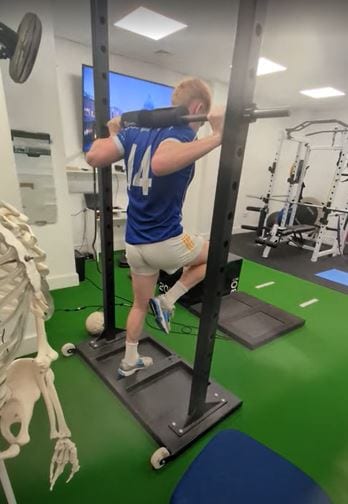
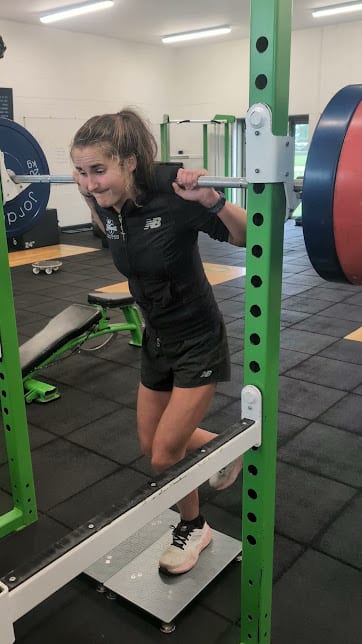
From the earliest stage we integrate long-duration heavy isometrics — think 5 × 45 seconds of sustained, heavy contraction. Isometrics are strongly linked to pain modulation: a single heavy isometric bout can reduce tendon pain immediately and for at least 45 minutes afterwards (Rio et al., 2015), while building force capacity without the tendon-compression stress of dynamic loading. Our approach is shaped by the isometric training systems of Dr Alex Natera — force, isometrics and plyometric capacity as the bridge from rehab to performance
.


2. Find the Underlyin Case — What's D

What's Driving Your Tendinopathy? we profile every driver — then treat the ones we find in you Spikes in Training Volume too much, too soon — the classic pre-season trigger Load > Tissue Capacity the tendon is asked to do more than it can currently tolerate Poor Motor Control how force is produced — not just how much Previous Injury History old injuries change how you move and load for years after Anatomy alignment, tendon shape & the anatomy you can't change Movement Patterns compensations under load — running, jumping, cutting Find the Driver → Treat What We Find → Re-test Targeted loading, control and movement retraining — then graded energy-storage work progressed on objective criteria, not the calendar Re-test & adapt at every stage

Athlete Profiling and Strength Development

Every athlete is profiled — creating a rounded picture of how they express force, where their asymmetries sit, and what their movement is doing to the tendon under load.


  • Tendon-specific strength profiling — isometric strength testing of the calf, quadriceps, hip and trunk musculature (VALD ForceFrame) to find the capacity deficits driving load intolerance
  • Isometric pain-modulation dosing — long-duration heavy holds programmed into the early phase, transitioned to heavy slow resistance as symptoms allow
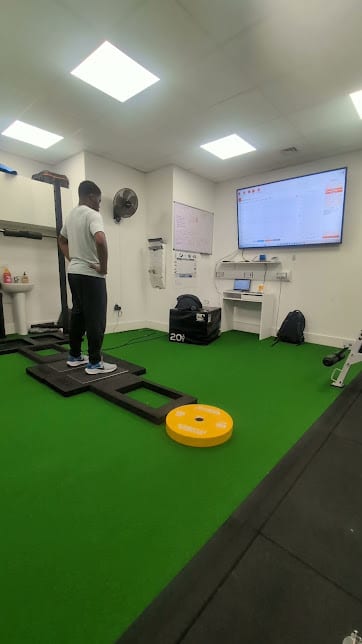
  • Jump profiling — countermovement jump, single-leg CMJ and drop jumps on ForceDecks: the plyometric capacity and reactive strength metrics Alex Natera's work identifies as the bridge back to sport
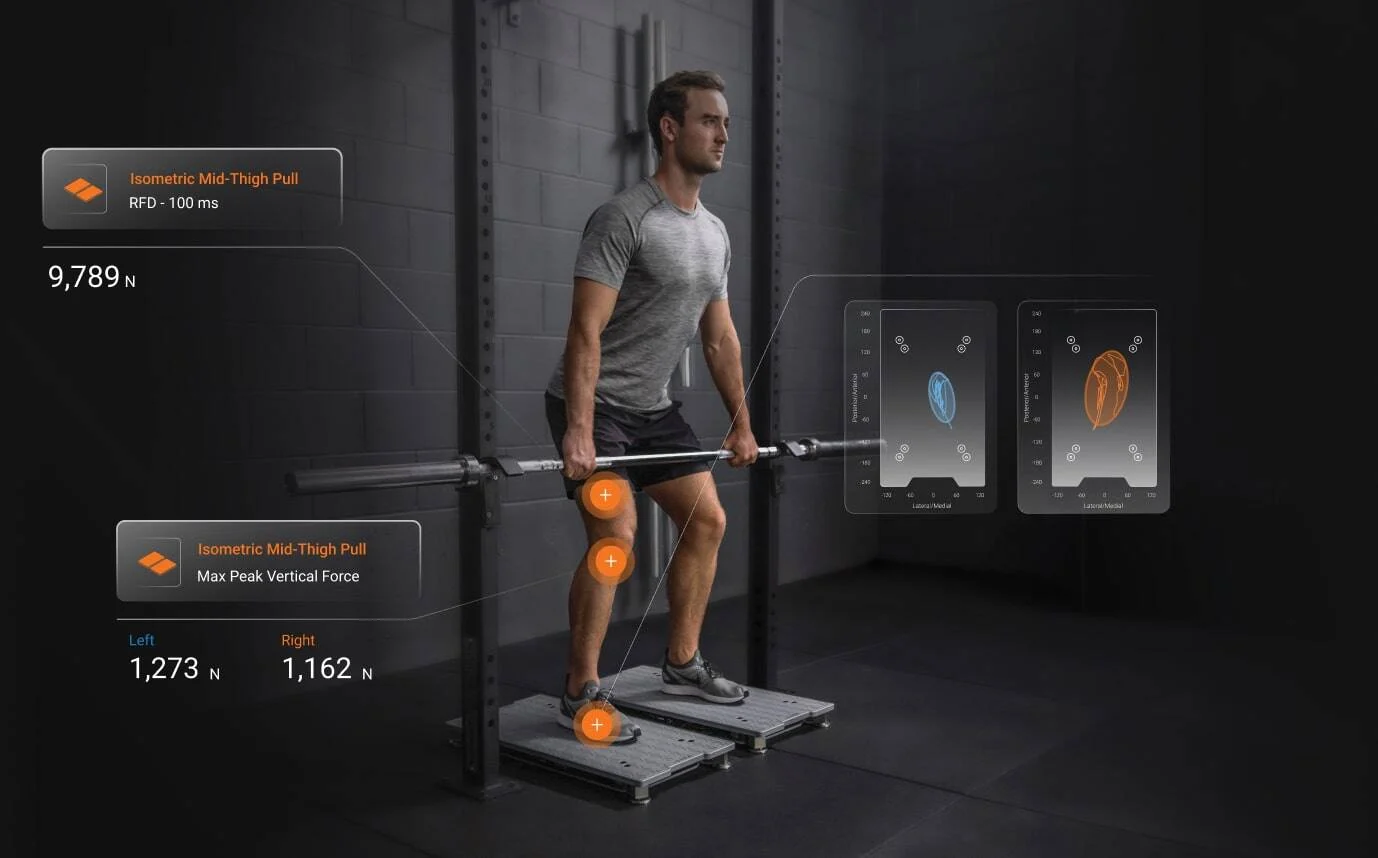
  • Rate of force development — IMTP and single-leg isometric testing, critical for sprinting, jumping and change of direction
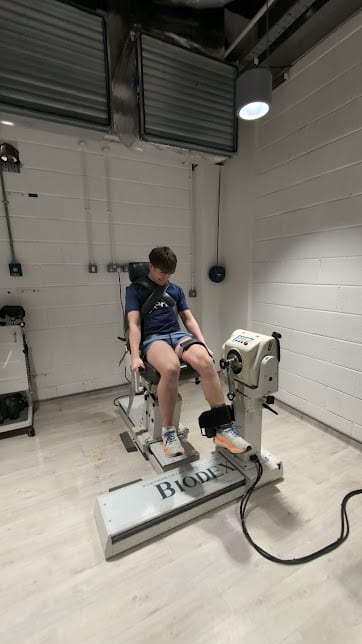
  • Isokinetic testing — objective strength at multiple velocities to clear the limb for full loading

Structured strength & conditioning, load monitoring, bar-speed profiling with velocity-based training, and in-depth movement coaching run throughout — developing the muscle strength systems and movement patterns that make the tendon system robust, not just pain-free.

Dynamic Movement Analysis and Return to Play

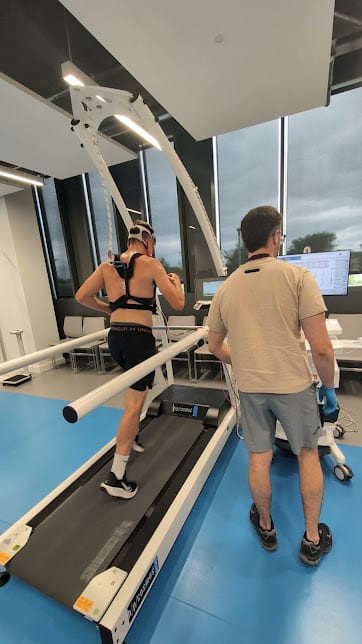
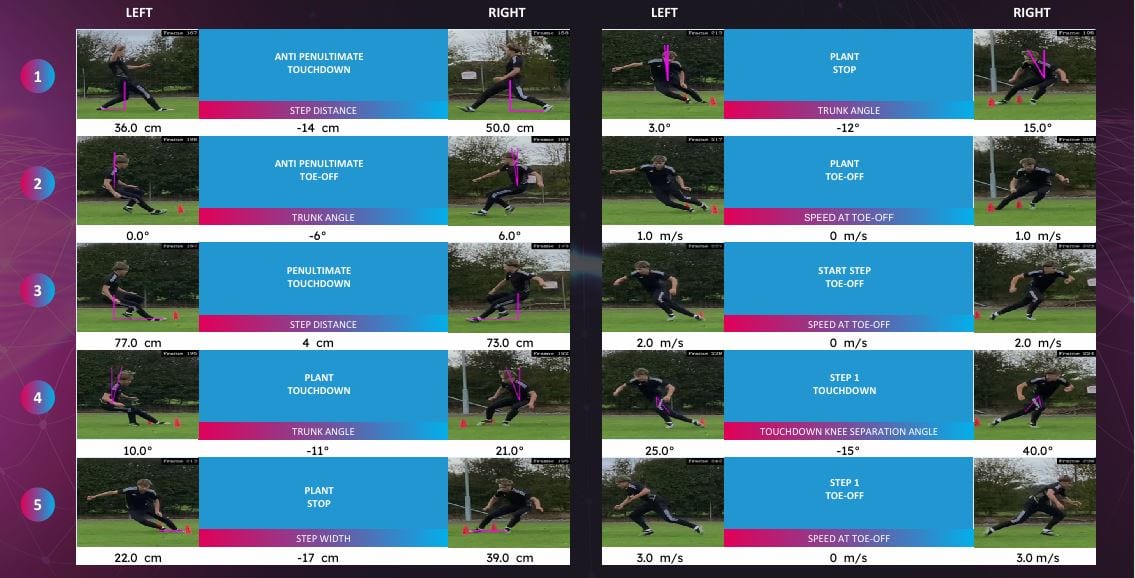
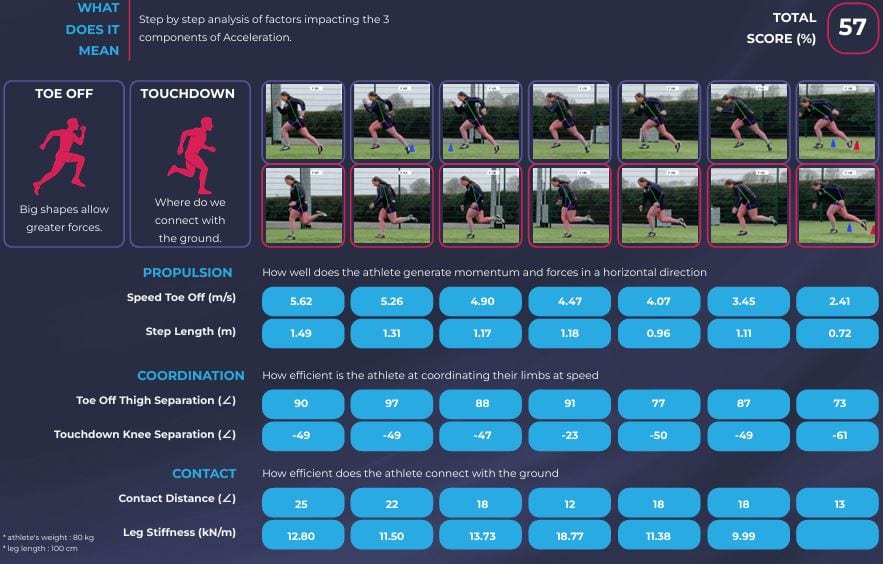
Once isometric and strength criteria are met, the focus switches to energy storage: how the athlete actually runs, jumps, cuts and lands. We analyse it, coach it, and re-test it.


You leave with all of your data — every score, every comparison, every stage of the pathway — so you can see exactly what you have restored and why you are ready to return.

Technology We Use

Objective technology guides every decision across the tendinopathy pathway.

Shockwave Therapy

Evidence-based shockwave for chronic tendon pain — stimulating healing and reducing pain in tendons that have failed to settle with loading alone. Learn more.

VALD ForceFrame

Isometric strength testing of the calf, quadriceps, hip flexors, extensors and trunk across multiple joint angles — objective capacity data and limb symmetry to guide every progression.

VALD ForceDecks

Dual force plate system for jump testing — countermovement jump, single-leg CMJ and drop jumps — measuring peak power, reactive strength index and inter-limb asymmetry.

VBT & Smart Speed Gates

Bar-speed monitoring to train at the right velocity for strength and power, plus sprint and jump timing to track readiness for return to play.

Tendinopathy Rehab – Frequently Asked Questions

Book a Tendinopathy Rehab Consultation in Tullamore

Whether you are managing a reactive Achilles flare-up, a stubborn patellar or gluteal tendon, or tennis elbow that has hung around for months, our clinic in Tullamore, Co. Offaly provides structured, data-driven tendinopathy rehabilitation for athletes and active individuals across Tullamore, Offaly and the Midlands.

Book an Appointment Online


Book A Time That Suits You

BOOK AN APPOINTMENT NOW BOOK AN APPOINTMENT NOW