
Tendinopathy
Expert tendon assessment, treatment and rehabilitation at Physio Tullamore — helping you return to the activities that matter.
Book a Tendinopathy Assessment in TullamoreExpert tendon assessment, treatment and rehabilitation at Physio Tullamore — helping you return to the activities that matter.
Book a Tendinopathy Assessment in Tullamore
At Physio Tullamore, we provide specialist assessment, treatment and rehabilitation for tendinopathy from
our clinic in Tullamore, Co. Offaly. Tendinopathy is one of the most common reasons people seek physiotherapy, affecting tendons such as
the Achilles, patellar, gluteal, hamstring and elbow tendons. Our approach combines a thorough assessment of your tendon, your loading
history and the factors contributing to your symptoms with a progressive, individualised rehabilitation programme.
For many years, painful tendon conditions were described as “tendinitis”, implying that the tendon was simply inflamed. Research has shown that most persistent tendon pain is not primarily an inflammatory problem. Instead, tendinopathy describes a complex process involving changes in tendon structure, cell activity, matrix organisation and the tendon’s capacity to tolerate load.
Our understanding of tendinopathy has been shaped significantly by the work of Jill Cook and Craig Purdam, who developed the tendinopathy continuum model to describe how tendons respond to load over time. Peter Malliaras has also made substantial contributions to tendon research and clinical management, helping to translate this science into practical rehabilitation strategies. At Physio Tullamore, we use this evidence-based framework to guide our assessment and treatment of tendinopathy.
Cook and Purdam described a continuum of tendon pathology with three distinct stages. Understanding which stage your tendon is in is central to planning the right management. The continuum can progress if a tendon is continually overloaded, but with appropriate load management it can also reverse in the earlier stages.
Reactive tendinopathy is an acute response to a sudden increase in load — for example a rapid increase in training, a new activity, or a change in surface or footwear. The tendon thickens and becomes painful as it attempts to adapt. With appropriate load management, a reactive tendon can settle and return towards normal. This stage is more common in younger athletes.
If a reactive tendon is not managed and the load continues, the tendon enters a stage of disrepair. The collagen matrix begins to break down, with increased cellularity and ingrowth of new blood vessels. There are attempts at healing, but the matrix becomes disorganised and the tendon’s structure is progressively compromised.
Degenerative tendinopathy is the chronic stage, characterised by significant collagen degeneration, cell apoptosis, matrix breakdown and neovascularisation. It is common in older athletes or those with long-standing tendon issues. Areas of degenerate tissue are unlikely to reverse, but function and capacity can still be substantially improved through appropriate rehabilitation.
As tendons become tendinopathic, they undergo not only structural change but also neurological change. There is ingrowth of new nerve fibres (neoinnervation) along with neovascularisation — the growth of new blood vessels into the tendon. These new nerve fibres are typically nociceptive (pain-sensing) and sympathetic in nature, and they contribute significantly to the pain experienced in tendinopathy.
This helps explain why tendinopathic tendons are painful: it is not simply a matter of structural damage, but also the presence of new sensory nerve fibres within the tendon itself. This process is well documented in the work of Cook, Malliaras and colleagues, and it underlines why a comprehensive assessment and a graded rehabilitation approach are so important.
Tendinopathy rarely develops in isolation. A number of factors can place excessive or abnormal load on a tendon, and identifying these is a key part of your assessment at Physio Tullamore:
Not all tendinopathies behave the same way. Understanding whether your tendon is being overloaded by tensile (pulling) forces or compressive forces is critical, because it changes the rehabilitation approach.
Tensile tendinopathy occurs when the tendon is overloaded by pulling forces. Tendons act like springs, storing and releasing energy — the Achilles during running is a classic example. Repeated tensile overload beyond the tendon’s capacity causes microdamage and pain.
Compressive tendinopathy occurs where the tendon is compressed against a bony prominence — for example the Achilles against the calcaneum, the gluteal tendons against the greater trochanter, or tibialis posterior against the medial malleolus. Compression is particularly important because it changes the rehabilitation approach: positions and exercises that compress the tendon need to be modified, with strategies such as heel lifts and altered stretch positions.
Many tendinopathies involve both tensile and compressive components. Identifying which is dominant helps guide your treatment and ensure rehabilitation is targeted appropriately.
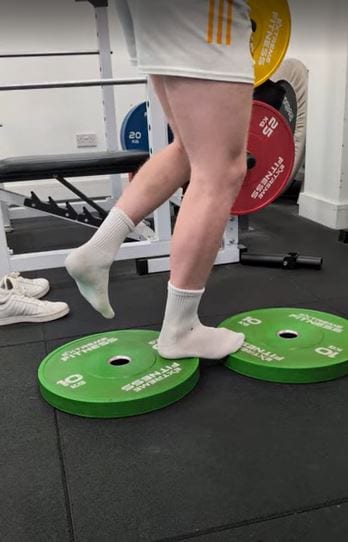
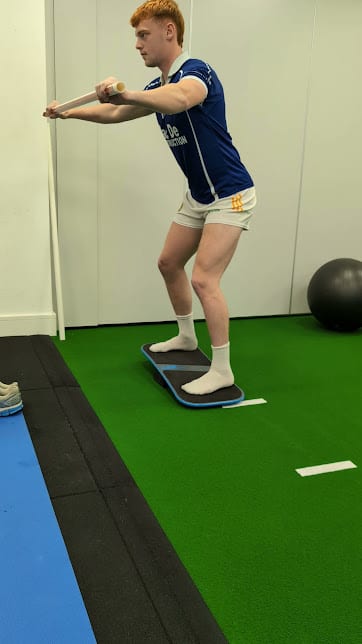
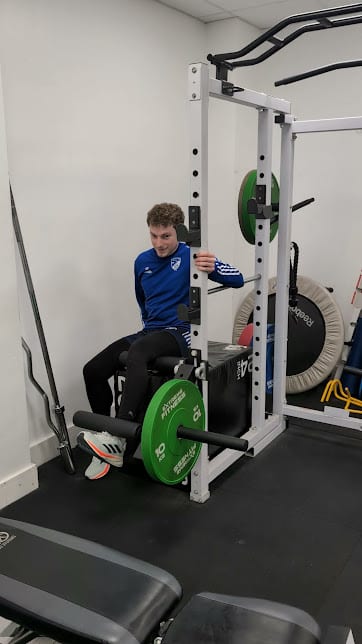
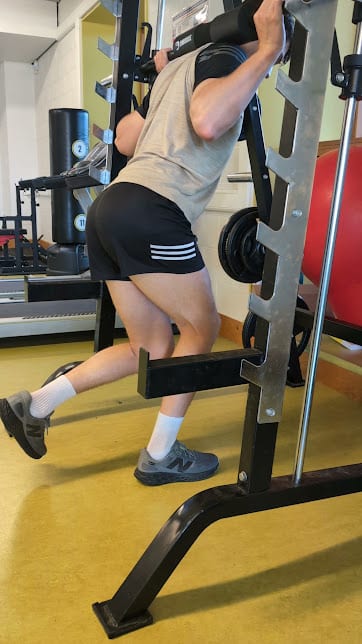
Effective tendinopathy management is built around understanding the tendon, the loads placed upon it and the factors driving your symptoms. At Physio Tullamore, first line management typically includes:
If you are experiencing persistent tendon pain — whether Achilles, patellar, gluteal, hamstring, elbow or elsewhere — a thorough assessment is the first step. Our clinic is based in Tullamore, Co. Offaly, providing physiotherapy and sports rehabilitation to patients and athletes from Tullamore, Offaly and across the Midlands.
Book an Appointment Online