
Shoulder Pain
Expert shoulder assessment, treatment and rehabilitation at Physio Tullamore
Book a Shoulder Pain Assessment in TullamoreExpert shoulder assessment, treatment and rehabilitation at Physio Tullamore
Book a Shoulder Pain Assessment in Tullamore
The shoulder is the most mobile joint in the human body, achieving its remarkable range of movement through a complex interplay of joints — the glenohumeral, acromioclavicular and scapulothoracic — and an intricate network of soft tissue structures including the rotator cuff, labrum, capsule and scapular stabilisers. This mobility comes at the cost of stability, making the shoulder vulnerable to a wide range of injuries and conditions.
At Physio Tullamore, we take a comprehensive approach to shoulder pain. Our physiotherapists combine hands-on treatment, exercise rehabilitation and adjunct therapies to address not only your symptoms but the underlying factors contributing to your shoulder problem. Whether you are dealing with a sports injury, a gradual onset condition or post-surgical rehabilitation, we will develop an individualised treatment plan to help you regain pain-free function.
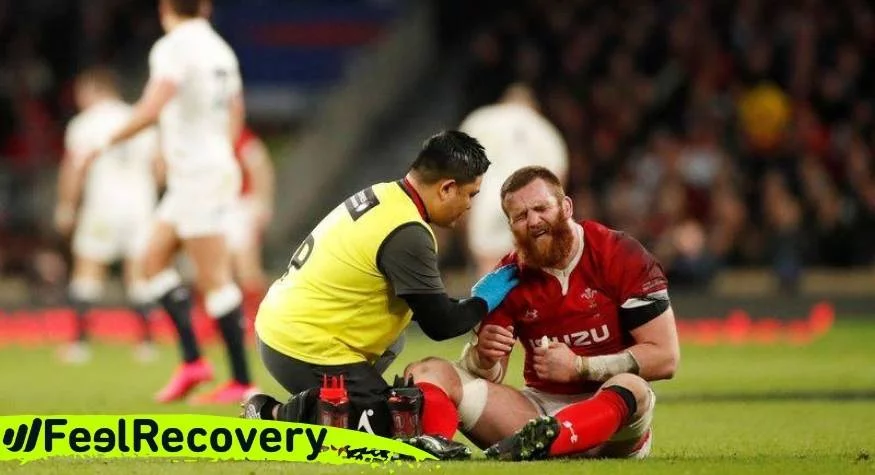
Shoulder instability ranges from traumatic dislocation to micro-instability and atraumatic instability. It can involve labral damage, capsular laxity or muscle patterning issues affecting the control of the shoulder joint.
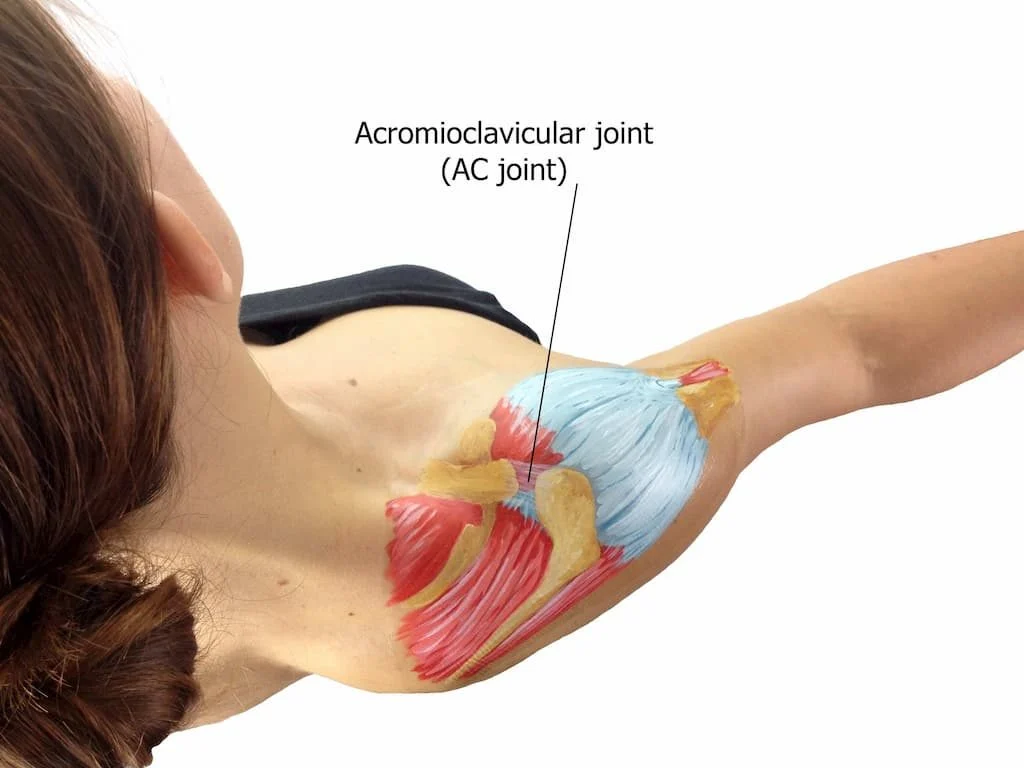
Injury to the acromioclavicular joint, commonly from a fall onto the point of the shoulder or direct impact. Ranges from mild sprain to complete rupture of the coracoclavicular ligaments, frequently seen in contact sports.
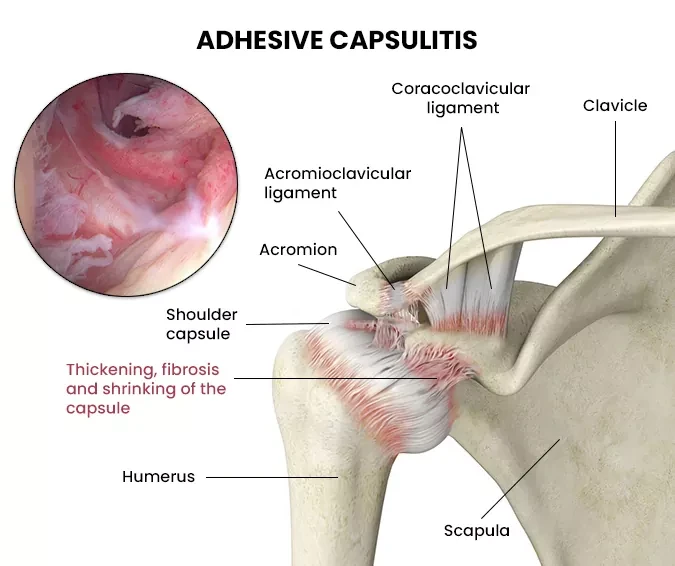
A condition where the shoulder capsule becomes inflamed and then fibrosed, leading to marked loss of range of movement and significant pain. Progresses through freezing, frozen and thawing phases.
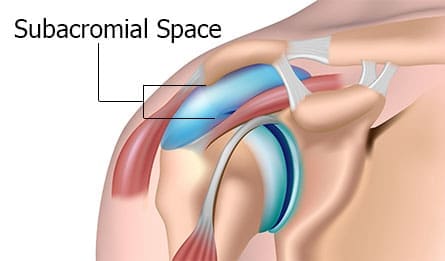
Primary (subacromial) impingement involves structural narrowing of the subacromial space, while secondary impingement is caused by functional factors such as rotator cuff weakness and poor scapular control. Subcoracoid impingement can also occur.
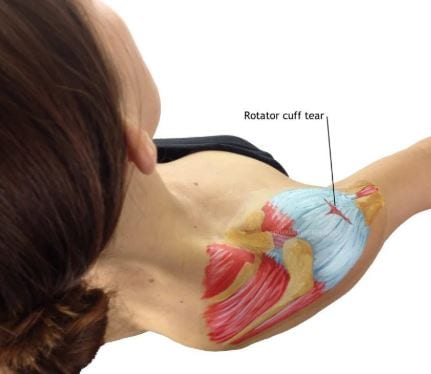
Degeneration or tendinopathy of the rotator cuff tendons, most commonly supraspinatus. Can cause pain, weakness and contribute to secondary impingement. Partial and full thickness tears can occur, especially in older populations.
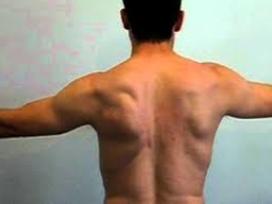
Abnormal movement and position of the scapula during arm movement. The scapula is the foundation of shoulder function, and poor scapular control can contribute to impingement, instability and rotator cuff problems.
Shoulder instability encompasses a spectrum of problems ranging from traumatic dislocation — where the humeral head is forced out of its socket — to micro-instability and atraumatic instability. Traumatic dislocation often results in damage to the labrum (Bankart lesion) or the bony architecture of the glenoid. SLAP (Superior Labrum Anterior and Posterior) lesions can also occur, affecting the attachment of the biceps tendon to the labrum. Atraumatic instability may involve capsular laxity, generalized joint hypermobility, or muscle patterning issues where altered muscle activation contributes to the sensation of instability.
Our treatment approach combines hands-on treatment with motor control retraining of the rotator cuff and scapular stabilisers, progressive strengthening, and a structured return-to-activity programme. Clinical Pilates forms an important part of our motor control approach for many patients with instability. For those returning to sport, performance testing provides objective assessment of shoulder readiness. In some cases, particularly following traumatic dislocation in younger athletes or where conservative management has not been successful, referral for a surgical opinion may be needed.
An ACJ sprain is an injury to the acromioclavicular joint, most commonly caused by a fall onto the point of the shoulder or a direct impact to the joint. The severity ranges from a mild sprain of the acromioclavicular ligament to a complete rupture of the coracoclavicular ligaments, which can result in visible deformity at the top of the shoulder. ACJ sprains are common in contact sports such as rugby, GAA and martial arts, as well as in cycling falls.
Treatment involves hands-on treatment, joint mobilisations, taping to support the joint, and a progressive strengthening and return-to-sport programme. The majority of ACJ sprains can be managed conservatively, with good outcomes even in some higher-grade injuries. For return to contact sport, performance testing helps ensure the shoulder is ready for the demands of competition. Severe cases with significant displacement or persistent symptoms may require referral for a surgical opinion.
Frozen shoulder, or adhesive capsulitis, is a condition where the shoulder capsule becomes inflamed and then progressively fibrosed, leading to a marked loss of range of movement and significant pain. The condition typically progresses through three phases: the freezing phase (increasing pain and progressive stiffness), the frozen phase (marked stiffness with less pain), and the thawing phase (gradual recovery of movement). Frozen shoulder can be primary (idiopathic, with no clear cause) or secondary (following injury, surgery or prolonged immobilisation). It is more common in people with diabetes and those aged between 40 and 60.
Our treatment approach combines hands-on treatment and joint mobilisations to restore range of movement, pain management strategies, and a progressive stretching and strengthening programme tailored to the phase of the condition. Injection therapy in the form of an intra-articular corticosteroid injection can be very effective in the painful freezing phase to reduce inflammation and allow rehabilitation to progress more comfortably. Treatment is adapted according to whether the shoulder is in the freezing, frozen or thawing phase.
Shoulder impingement refers to the compression of soft tissue structures within the shoulder during movement. There are several types:
Primary impingement involves structural narrowing of the subacromial space, often due to acromial morphology (such as a hooked acromion), bony spurs, or a thickened subacromial bursa. The rotator cuff tendons and subacromial bursa become compressed during overhead movements, leading to pain, inflammation and potential tendon damage over time.
Secondary impingement is caused by functional narrowing of the subacromial space. This is the more common type and is very responsive to rehabilitation. It typically results from rotator cuff tendinopathy — where weakness and poor control of the cuff muscles allows the humeral head to ride up under the acromion — combined with poor scapular control and altered movement patterns. Addressing these functional factors through targeted rehabilitation can significantly improve symptoms.
Subcoracoid impingement involves compression of the subscapularis tendon and the long head of the biceps tendon between the coracoid process and the lesser tuberosity of the humerus. This less common form of impingement can cause anterior shoulder pain and requires careful assessment to distinguish from other causes.
Treatment combines hands-on treatment, joint mobilisations, and motor control and strength training to improve global shoulder function — with particular emphasis on the rotator cuff and scapular control — along with posture correction. Shockwave therapy may be used for tendon-related components of impingement, while injection therapy in the form of a subacromial corticosteroid injection can help reduce inflammation in selected cases. Clinical Pilates supports the motor control approach, helping to retrain optimal shoulder and scapular movement patterns.
Rotator cuff tendinopathy refers to degeneration or tendinopathy of the rotator cuff tendons, most commonly the supraspinatus tendon. The condition follows the tendinopathy continuum — from reactive tendinopathy through dysrepair and degenerative change — and can cause pain, weakness and functional limitation. Rotator cuff tendinopathy is a common contributor to secondary impingement, as weakness and poor control of the cuff muscles allows the humeral head to migrate superiorly during overhead activities. Partial and full thickness tears can occur, particularly in older populations where degenerative changes are more prevalent.
Treatment centres on progressive tendon loading, careful load management, and addressing the biomechanical factors contributing to the tendinopathy — including scapular control, posture and movement patterns. Shockwave therapy may be considered for persistent tendon pain, while injection therapy can be used to reduce pain and inflammation in selected cases to facilitate rehabilitation. The goal is to restore tendon capacity and shoulder function through a structured, progressive rehabilitation programme.
Scapular dyskinesis refers to abnormal movement and position of the scapula during arm movement. The scapula is the foundation of shoulder function — it provides the stable base from which the arm operates and serves as the attachment site for numerous muscles. When scapular control is compromised, it affects the entire shoulder complex and can contribute to impingement, instability and rotator cuff problems. Scapular dyskinesis is often related to weak or inhibited serratus anterior and lower trapezius muscles, a tight pectoralis minor, and poor postural awareness. Thoracic spine and cervical spine issues can also contribute to scapular and shoulder problems, which is why we may also assess the spinal pain contribution to your shoulder symptoms.
Treatment involves hands-on treatment to restore thoracic and scapular mobility, motor control retraining to improve the coordination and timing of scapular muscle activation, strengthening of the scapular stabilisers (particularly serratus anterior and lower trapezius), and postural education. Clinical Pilates forms an important part of our motor control and postural approach, helping patients develop the body awareness and control needed for optimal shoulder function.
Motor control retraining of the rotator cuff and scapular stabilisers, Clinical Pilates, progressive strengthening, and performance testing for return to sport.
Joint mobilisations, taping, progressive strengthening, and performance testing for return to sport.
Joint mobilisations, injection therapy (corticosteroid in the freezing phase), progressive stretching and strengthening.
Joint mobilisations, injection therapy (subacromial corticosteroid), Shockwave therapy for tendon-related components.
Motor control, Joint mobilisations and strength training, Clinical Pilates, Shockwave therapy for tendon-related components.
Progressive tendon loading, Shockwave therapy, injection therapy for pain relief.
Motor control retraining, Clinical Pilates, postural education, and spinal assessment including spinal pain evaluation.
One of the most important principles at Physio Tullamore is that shoulder pain should not be treated in isolation. The shoulder does not function alone — it is part of a complex kinetic chain involving the cervical and thoracic spine, the scapula, the ribcage and the core. Factors that can contribute to shoulder pain include:
reduced rotator cuff strength and endurance
poor scapular control and dyskinesis
thoracic stiffness and postural issues
cervical spine referred pain
training load errors and sudden increases in activity
biomechanical factors and movement compensations
inadequate warm-up or recovery
return to sport following injury
For this reason, your physiotherapist may combine hands-on treatment with a structured rehabilitation plan. Our aim is not simply to reduce symptoms — it is to help you regain the shoulder function and capacity required for work, sport and daily life.
Physio Tullamore provides physiotherapy, sports rehabilitation and performance services from our clinic in Tullamore, County Offaly. Our approach combines thorough clinical assessment with progressive rehabilitation and, where appropriate, objective strength and performance testing.
Assessment by an experienced clinician
individualised treatment planning
hands-on treatment and joint mobilisations
motor control and scapular retraining
progressive strengthening and tendon loading
access to shockwave therapy and injection therapy where appropriate
Clinical Pilates for motor control and postural retraining
return-to-sport planning and performance testing
clear advice regarding activity and training load
Rather than simply treating the painful area, we aim to identify the factors contributing to your shoulder problem and develop a plan to help you return to the activities that matter to you.
If you are experiencing shoulder pain — whether from a recent injury, a gradual onset condition, or a persistent problem that has not fully resolved — we can help. Our clinic is based in Tullamore, Co. Offaly, providing physiotherapy and sports rehabilitation to patients and athletes from Tullamore, Offaly and across the Midlands.
Book an Appointment Online